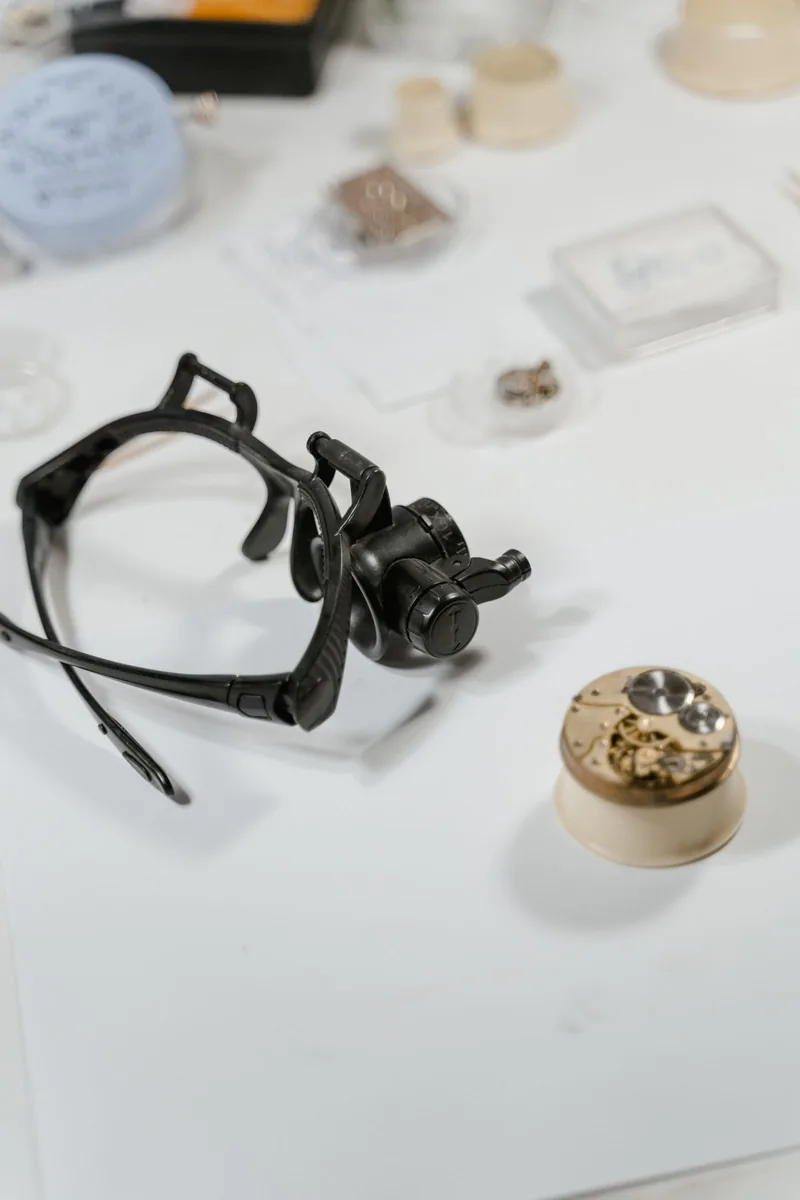
Who are TAG Heuer?
TAG Heuer is a Swiss watchmaker that began in Saint-Imier in 1860, when Edouard Heuer opened his workshop at the age of 20. It was called Heuer until 1985 and has been owned by the French luxury group LVMH since 1999. This page covers its history, collections and ownership, then what to check when buying a pre-owned TAG Heuer in the UK.
TAG Heuer is best known for chronographs and its long connection with motor racing, through the Carrera (1963) and the Monaco (1969) (LVMH). It makes mechanical watches, including its own chronograph movements, as well as quartz watches and the Connected smartwatch (LVMH; TAG Heuer Magazine). It has four manufacturing sites in Switzerland: La Chaux-de-Fonds, Cornol, Tramelan and Chevenez (LVMH).
The history of TAG Heuer
TAG Heuer’s history runs from a Saint-Imier workshop in 1860 to a brand of the LVMH group. The key dates are the oscillating pinion patent (1887), the Mikrograph stopwatch (1916), the Carrera (1963), the Monaco and Calibre 11 (1969), the TAG takeover (1985) and the sale to LVMH (1999).
Saint-Imier and the chronograph. Edouard Heuer founded the business in Saint-Imier in 1860 (LVMH). From 1869 Heuer used a patent for crown-wound pocket chronographs that needed no separate key (TAG Heuer Magazine). In 1887 it patented an improved oscillating pinion, which let a chronograph start and stop instantly with a push-button (LVMH); Wikipedia notes that the part is still used in mechanical chronographs.
Timing instruments. In 1911 Charles-Auguste Heuer introduced the Time of Trip, a dashboard timer for cars and aircraft (TAG Heuer Magazine). The Mikrograph of 1916 was a stopwatch accurate to 1/100th of a second (LVMH). In 1933 came the Autavia, a dashboard timer whose name joined “automobile” and “aviation” (TAG Heuer Magazine).
Jack Heuer’s chronographs. In 1962 John Glenn wore a Heuer stopwatch when he orbited the Earth on Mercury-Atlas 6, and the Autavia name moved to a wrist chronograph (Wikipedia; TAG Heuer Magazine). Jack Heuer designed the Carrera in 1963, naming it after the Carrera Panamericana road race in Mexico (TAG Heuer Magazine). In 1969 a joint venture led by Heuer launched the Calibre 11 Chronomatic, one of the first automatic chronograph movements, and Heuer introduced the square Monaco (LVMH). Heuer, Breitling and Hamilton announced their automatic chronographs at press conferences on 3 March 1969 (Wikipedia).
Motor racing. In 1969 Jack Heuer put the brand’s logo on Jo Siffert’s Formula One car, which the company describes as the first time a watchmaker appeared on an F1 livery (TAG Heuer Magazine). Steve McQueen wore a Monaco in the 1971 film Le Mans (TAG Heuer Magazine). Heuer was Ferrari’s official timepiece in the 1970s (Wikipedia).
TAG and LVMH. In 1985 Techniques d’Avant Garde (TAG) bought Heuer, and the company became TAG Heuer in 1986 (TAG Heuer Magazine). The Formula 1 collection was the first line launched under the new name, the same year the TAG Heuer logo appeared on McLaren’s Formula One cars (TAG Heuer Magazine). In September 1999 TAG Heuer accepted a bid from LVMH of CHF 1.15 billion, and LVMH went on to buy nearly all of the company (Wikipedia).
Recent years. TAG Heuer launched the Connected smartwatch in 2015 (LVMH). In 2025 it became the title sponsor of the Monaco Grand Prix and returned as Formula One’s official timekeeper (Wikipedia).
What is TAG Heuer known for?
TAG Heuer is known for chronographs and sports timing, from the 1887 oscillating pinion and the 1916 Mikrograph to the Carrera and Monaco. It is also known for the 1969 Calibre 11 automatic chronograph, its motor-racing partnerships, and the Connected smartwatch of 2015. The details below are each sourced.
Chronographs and fine timing. The oscillating pinion of 1887 made chronographs start and stop instantly (LVMH). The 1916 Mikrograph measured to 1/100th of a second (LVMH), and in 2012 the Mikrogirder measured to 1/2,000th of a second (Wikipedia).
The automatic chronograph. The Calibre 11 Chronomatic of 1969, developed by a Heuer-led joint venture, was among the first automatic chronographs offered worldwide (LVMH; TAG Heuer Magazine). The project, codenamed Project 99, was led by Heuer with Dubois-Depraz and Buren, whose micro-rotor movement was the base, and Hamilton, which bought Buren in 1968. The Chronomatic was presented on 3 March 1969 in three models: the Monaco and Chronomatic versions of the Autavia and Carrera (TAG Heuer Magazine, Calibre 11).
Motor racing. TAG Heuer’s partnerships have included Ferrari in the 1970s, McLaren in the 1980s and, more recently, Red Bull Racing, the Porsche Formula E team and the Monaco Grand Prix (Wikipedia; LVMH).
Its own movements. TAG Heuer makes movements at its manufacture in Chevenez in the Jura, including the Heuer 02 chronograph calibre with a column wheel and vertical clutch (LVMH). TAG Heuer has also used movements from outside suppliers; the 1977 Kentucky and Pasadena models, for example, used the Valjoux 7750 (Wikipedia). Our guide to in-house and outsourced movements explains why buyers ask.
Quartz and smart watches. The 1986 Formula 1 used quartz movements (TAG Heuer Magazine), and the Connected of 2015 is a smartwatch (LVMH). Our guide to mechanical and quartz watches explains the difference.
Which TAG Heuer collections are there?
TAG Heuer’s main collections are the Carrera and Monaco chronographs, the Aquaracer dive and sports watches, the Formula 1, the Link with its S-shaped bracelet, and the Connected smartwatch. All six trace back to Heuer or early TAG Heuer designs (TAG Heuer Magazine).
The collections table on this page gives the year each family began and a one-line description. A few points help when you are reading listings:
- Same name, different movements. A Carrera, Aquaracer or Formula 1 may have a quartz movement, a bought-in automatic or a TAG Heuer calibre such as the Heuer 02 (TAG Heuer Magazine; LVMH; Wikipedia). Ask which calibre a watch has and check it against the reference.
- Re-editions. TAG Heuer re-issued the Carrera and other classic chronographs in 1996 (TAG Heuer Magazine), and the Autavia returned in 2017 (TAG Heuer Magazine). A re-edition is a modern watch with a historical design, not a vintage Heuer.
- Renamed lines. The Link was the S/el until 1999, and the Aquaracer was the 2000 Series until 2004 (TAG Heuer Magazine). Older listings may use either name.
- Heuer and TAG Heuer. The TAG Heuer name dates from 1986 (TAG Heuer Magazine), so watches made before the TAG takeover carry the Heuer name alone.
- Reference numbers. Each version has a reference number that identifies the exact model. The serial number identifies the individual watch.
Who owns TAG Heuer?
TAG Heuer is owned by LVMH Moët Hennessy Louis Vuitton, the French luxury group, which bought it in 1999. It sits in LVMH’s watches and jewellery business alongside other houses. LVMH is a listed company and publishes results for the group as a whole.
LVMH lists TAG Heuer among its watches and jewellery maisons (LVMH). Wikipedia describes the 1999 deal as a bid of CHF 1.15 billion, conditional on 50.1% of TAG Heuer’s shares being tendered, after which LVMH came to own nearly 100% of the company (Wikipedia). LVMH describes itself as gathering more than 75 brands (LVMH). Before LVMH, the company was owned by TAG (Techniques d’Avant Garde), which bought Heuer in 1985 (TAG Heuer Magazine). Jack Heuer, great-grandson of the founder, is honorary chairman (Wikipedia).
In the UK, LVMH’s watch company is LVMH Watch & Jewellery (UK) Limited, incorporated on 5 March 1982 as Heuer Time (U.K.) Limited and called TAG-Heuer (U.K) Limited from 1986 to 1987 (Companies House).
Buying a pre-owned TAG Heuer in the UK: what to check
Check that the serial and reference numbers on the watch match its papers, that the papers and any service records are genuine, and that the watch is not recorded as stolen. Then check which movement it has, and whether any of the two-year warranty or its three-year online extension is left.
1. Papers and the full set. A new TAG Heuer comes with a warranty card. Ask exactly which items are included and whether they are originals. Our guide to what “full set” means explains what each item proves and what it does not.
2. Serial and reference numbers. The serial number and reference on the watch should match the card and any receipts. A seller who will not show the numbers before you pay is a reason to walk away.
3. The movement. Because the same collection name covers quartz, bought-in automatic and TAG Heuer-made movements, confirm the calibre against the reference before you agree a deal. For a Connected watch, check that it is no longer paired to the previous owner’s account.
4. Authenticity. Fake TAG Heuer watches are common, and vintage Heuers can have replacement dials, hands or bezels. Buy from a seller who will put authenticity in writing and accept returns, and have the watch checked by a watchmaker you choose. Our guide on how to spot a fake watch covers what a watchmaker looks at.
5. Stolen-watch check. Before you pay, check the serial number against a stolen-watch register and ask the seller to confirm the watch is not reported lost or stolen. Our stolen-watch check guide lists the UK registers and how to use them.
6. Warranty and servicing. TAG Heuer’s international limited warranty lasts two years from purchase, and registering the watch online adds three years, for five in total (TAG Heuer customer service). The extension applies to eligible models, and the list has changed over time. Ask when the watch was last serviced, by whom, and for the paperwork. See watch warranties explained.
7. Who you buy from. There are three main routes in the UK:
| Route | What it is | Guarantee |
|---|---|---|
| TAG Heuer boutique or authorised retailer | Sells new watches; some also sell second-hand stock | TAG Heuer’s warranty on new watches; the retailer’s terms on second-hand |
| Independent (grey-market) dealer | A dealer not appointed by TAG Heuer, selling new or second-hand watches | The dealer’s own warranty, if offered |
| Private seller or marketplace | An individual, or a platform connecting buyers and sellers | Usually none beyond the platform’s buyer protection |
Sources: TAG Heuer customer service, How long does my warranty last with the warranty extension? (checked 29 October 2026).
We found no TAG Heuer-run certified pre-owned programme for the UK. For how independent dealers compare with appointed retailers, read grey market versus authorised dealer.
For the full process from setting a budget to collecting the watch, see the guide to buying a luxury watch.
Frequently asked questions
Where was TAG Heuer founded?
In Saint-Imier, Switzerland, in 1860, by Edouard Heuer (LVMH).
What does TAG stand for?
Techniques d’Avant Garde, the group that bought Heuer in 1985. The company became TAG Heuer in 1986 (TAG Heuer Magazine).
Who owns TAG Heuer?
LVMH, the French luxury group, which bought it in 1999 (Wikipedia).
Is TAG Heuer Swiss made?
TAG Heuer is a Swiss company with four manufacturing sites in Switzerland: La Chaux-de-Fonds, Cornol, Tramelan and Chevenez (LVMH).
Does TAG Heuer make its own movements?
For some models. It makes movements at Chevenez, including the Heuer 02 chronograph (LVMH), and has also used movements from outside suppliers (Wikipedia). Check the calibre of the watch you are buying.
What is the difference between Heuer and TAG Heuer watches?
Watches made before the 1985 TAG takeover are signed Heuer; the TAG Heuer name dates from 1986 (TAG Heuer Magazine).
Why is the Carrera called the Carrera?
Jack Heuer named it after the Carrera Panamericana road race in Mexico (TAG Heuer Magazine).
How long is the TAG Heuer warranty?
Two years, extended by three years when an eligible watch is registered online (TAG Heuer customer service).
Which TAG Heuer did Steve McQueen wear?
A Monaco, in the 1971 film Le Mans (TAG Heuer Magazine).
This page is general information. Watch60 is independent and has no commercial relationship with TAG Heuer or LVMH.
Sources (checked 29 October 2026)
- LVMH, TAG Heuer
- TAG Heuer Magazine, The history of the Calibre 11 and the TAG Heuer Monaco Chronomatic (9 December 2024), TAG Heuer: a history written in seconds (5 August 2025), The story of TAG Heuer’s legendary collections (27 February 2024) and A legacy in every lap: the history of the Formula 1 collection (9 January 2025)
- TAG Heuer customer service, How long does my warranty last with the warranty extension?
- Companies House, LVMH Watch & Jewellery (UK) Limited, 01620385
- Wikipedia, TAG Heuer
We check the facts on this page against the sources listed, and it is correct to the best of our knowledge as of October 2026. Brands change their warranty, servicing and sales terms, so confirm them with the brand or the seller before you buy.