To spot a fake watch, start with the seller and the price, then check the serial number and paperwork, then examine the watch closely. None of those checks is conclusive alone, because good counterfeits copy the details people look for. An independent watchmaker’s inspection is the check that settles it, and the right to return the watch if they reject it is the protection that matters.
A counterfeit watch is a copy made to pass as a branded watch, using the maker’s name and logo without permission. This guide is general information, not legal advice.
How do you spot a fake watch?
You spot a fake by combining several weak signals, not by hunting for one tell. Look at who is selling, whether the price makes sense, whether the details on the watch match the papers, and whether the seller lets you have it independently checked. A seller who refuses an inspection or a written return promise has told you what you need to know.
Online, you are judging photographs. Ask for new, dated photos of the dial, caseback, clasp and movement, taken in good light. Stock images prove nothing. A watch sold openly as a lookalike is a different thing from a fake passed off as the real one; our guide to homage watches and how they differ from fakes explains where the line sits.
What price and seller warning signs should you look for?
A price far below similar listings is the most common warning, and seller behaviour is the second. Cheshire East Trading Standards advises treating bargains with suspicion and notes that sellers can be hard to track down after a sale. Check the seller’s address, trading history and reviews, and whether a returns policy exists.
Warning signs worth acting on:
- Payment demanded by bank transfer, cryptocurrency or “friends and family” payment methods.
- Pressure to buy today, or a story that explains the low price.
- Photos taken from other listings, or none of the actual watch.
- Refusal to provide the serial number before you pay.
- No address, no returns policy, and a new account with no history.
Watch prices are also compared in our guide to buying a luxury watch; compare several listings and note dates, since prices move.
How big is the counterfeit watch problem, in practice?
Large enough that assuming “it won’t happen to me” is not a safe starting point. UK Border Force and HM Revenue & Customs reported seizing counterfeit goods with a retail value exceeding £500 million between 2021 and 2023 at the UK border alone, across categories including clothing, accessories, automotive parts and electrical goods (gov.uk, “Report shows £500m in counterfeit goods intercepted at UK border”, checked 30 October 2026). That figure covers goods stopped before they reach a buyer; it says nothing about what gets through, which is the point of the buyer-side checks in this guide.
Separately, research reported by Watchfinder & Co. in 2023 estimated 1,010,572 fake watches in circulation in the UK, and found that the proportion of counterfeits its own experts judged spottable “at a glance” had fallen from roughly 80% about five years earlier to around 20% by 2023, meaning about 80% needed closer scrutiny to identify (Watchfinder & Co., reported by FashionUnited, August 2023). Dealers use the trade term “superfake” or “superclone” for copies built to this standard: ones that can pass a casual visual check and sometimes a photograph, and that increasingly need an inspection by someone who has handled the genuine watch, not just a careful look.
What can you check on the watch itself?
Check anything the maker engraves, prints or finishes consistently: the dial text, the date window, the crown, the caseback, the clasp and the movement if visible. Counterfeits are often wrong in small ways, such as spelling errors, uneven lettering and poorly drawn logos, the same details Cheshire East Trading Standards lists for counterfeit goods generally.
| Check | What you are looking for | Limits of the check |
|---|---|---|
| Dial printing | Even, sharp lettering; no spelling errors | High-end fakes can print well |
| Date window and cyclops | Date aligned in the window, cleanly set | Easy to copy on a close fake |
| Crown and winding | Smooth action; logo cleanly engraved | Needs knowledge of the genuine feel |
| Caseback | Engraving crisp and consistent with the maker’s style | Cases can be re-engraved |
| Weight and bracelet | Feels solid; links and clasp finished evenly | Weight alone proves little |
| Movement | Matches what the maker uses in that model | Only a watchmaker can open it safely |
| Serial number | Matches papers; not duplicated on a register | A copied number can pass a casual look |
Sources: Cheshire East Council Trading Standards, counterfeit goods. The table's checks are general buying practice, not a manufacturer's authentication procedure.
Do not open a caseback yourself. You can damage the watch and void any warranty.
Do the checks differ for a mechanical watch versus a quartz watch?
Slightly, because the two movement types give off different signals even before a watchmaker opens the case. A mechanical watch run near the ear gives a faint, continuous ticking from the escapement, and its seconds hand sweeps rather than jumping once a second; a counterfeit mechanical movement can still tick and sweep, so this tells you the movement type, not whether it is genuine. A quartz watch is usually silent or gives a very quiet, regular electronic tick, and its seconds hand moves in a single step each second; an unusually loud tick, a stuttering or multi-step jump, or a seconds hand that drifts out of sync with the minute hand over a few hours can indicate a cheap or failing movement, genuine or not. Weight is a weaker signal than people assume: a counterfeiter aiming for a convincing copy can and often does add weight to a case, so a heavy feel on its own proves nothing, though an unusually light watch for its stated case material is worth asking about. None of these signs is conclusive; they decide whether a watch deserves the inspection described below, not whether it passes.
A loupe or strong magnifier can also be used on the lume (the glowing material on hands and markers) without opening the case: compare the colour and evenness of the glow after exposure to light with photos of the same reference from the brand or a specialist dealer, since colour, brightness and how evenly it is applied can differ between a genuine lume compound and a cheaper substitute. This is a supporting check, not a decisive one, because lume quality varies even between genuine watches of different ages and because a good copy can use a similar compound.
What is a “Frankenwatch”, and how is it different from a fake?
A Frankenwatch is a genuine watch that has been reassembled from mismatched parts, some genuine and some not, rather than a complete copy built from nothing. A seller might swap a damaged dial for a non-genuine replacement, fit a case that did not originally hold that movement, or combine a genuine case with a counterfeit bracelet, often to save on repair costs or to create a rarer-looking configuration than the parts actually support. This matters for a buyer because the checks that catch a full counterfeit, such as a wrong serial number or an obviously wrong logo, often will not catch a Frankenwatch, since most of the watch really is genuine; it is the combination, not any single part, that is wrong.
The practical consequence is the same as for a full fake: an independent watchmaker opening the case is the check that actually catches this, because they can compare the movement’s reference and finishing against what the case and dial should hold for that model and year. Ask the watchmaker specifically whether the dial, hands, movement and case all look original to each other and to the stated reference, not only whether each part individually looks genuine.
How do online marketplaces handle reports of fake watches?
Most major marketplaces have their own reporting process, separate from the legal routes covered later in this guide, and using it can get a listing or a seller removed even when a formal legal claim would take longer. eBay operates a Verified Rights Owner (VeRO) programme that lets brand owners and their agents report listings they believe infringe their trademark or copyright, leading to the listing being removed and, for repeat sellers, account restrictions; a buyer who believes they have bought a counterfeit can also report it directly to eBay’s customer service, separately from any VeRO action by the brand itself. Chrono24 states that it prohibits the sale of counterfeit watches on its platform and offers certification routes for some listings; our Chrono24 safety guide covers how to report a suspected fake there and what its certification does and does not cover.
Reporting to the marketplace does not replace reporting to Trading Standards or pursuing a refund, but it is usually faster to action and can stop the same seller reaching other buyers while your own claim is still being resolved. Keep a copy of whatever report you submit and any reference number the platform gives you.
Do box and papers prove a watch is genuine?
No. Box and papers help, but they can be replaced, mixed between watches or faked. They are useful because a mismatch is a red flag: a serial number on the papers that differs from the one on the watch, or papers dated before the model existed. Read what “full set” means for how to treat them.
A genuine watch can also be sold with the wrong box, so a mismatch calls for questions, not an automatic decision.
When should you use a watchmaker?
Use one for any pre-owned watch you plan to keep, and always when the price is large, the seller is new to you, or something feels off. Many dealers and marketplaces allow a short inspection period. Use it for the watchmaker visit, not to think it over.
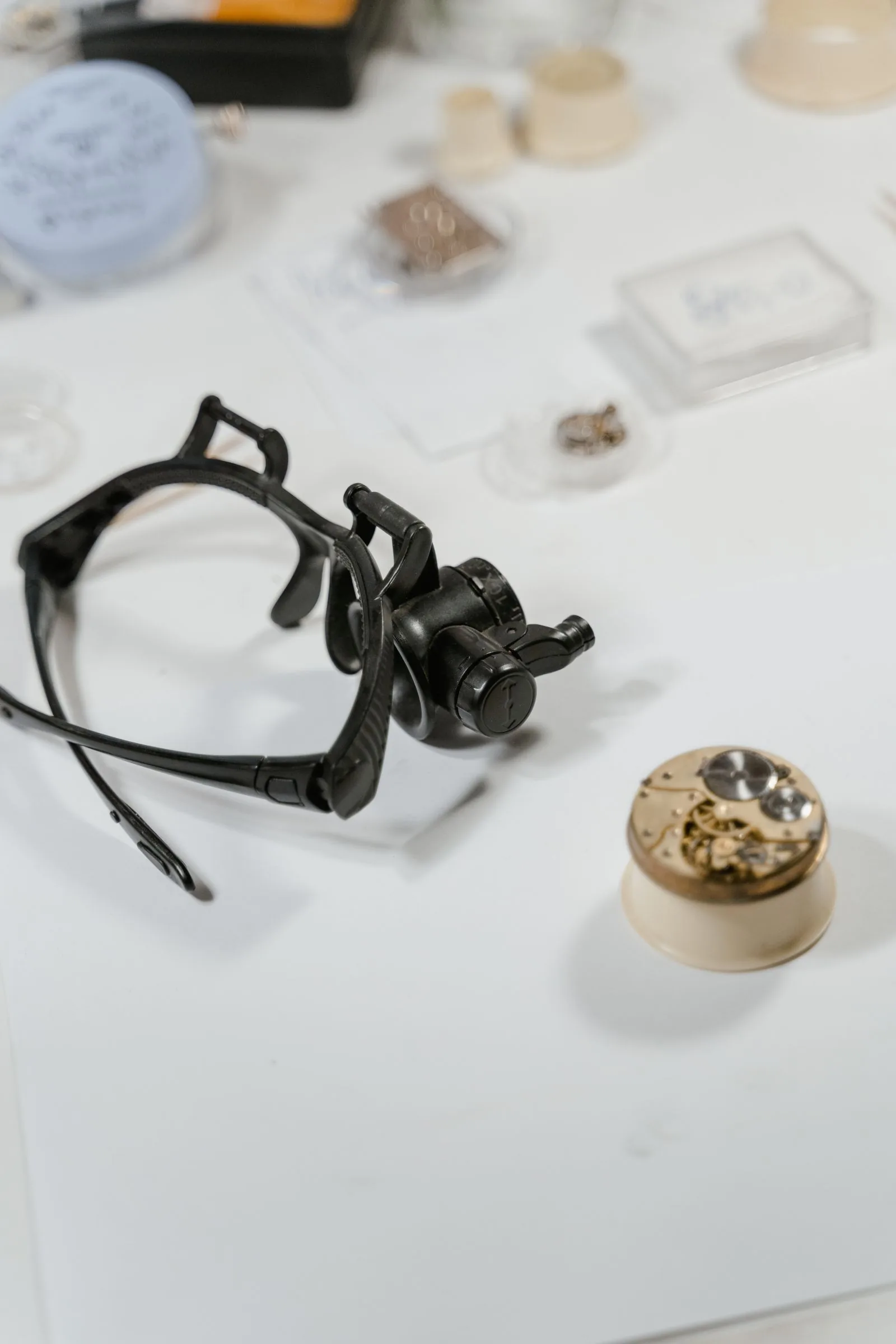
Ask the seller before purchase: “If a watchmaker I choose says this is not authentic, will you refund me in full?” Get the answer in writing. For legal rights if the seller is a trader, see consumer rights when buying a watch online in the UK.
A useful written report from the watchmaker answers a short, specific set of questions rather than giving a vague verdict. Ask them to confirm, in writing: whether the movement matches the brand’s published specification for that reference; whether the case, dial, hands and bracelet appear original to each other, which is the check that catches a Frankenwatch as well as a full fake; whether the serial number, where visible, is consistent with the case and matches any papers provided; and whether anything about the watch’s condition is inconsistent with the seller’s description, such as undisclosed polishing or parts replacement. A one-line “this is genuine” or “this is fake” is less useful to you in a dispute than a written answer to each of these points, because a seller or a card provider assessing a claim will want to see what was actually checked.
Here is an illustrative scenario showing why the written promise matters more than the inspection itself. Suppose a buyer pays £4,200 for a pre-owned watch from a private seller found through a classified ad, with no written return terms agreed beforehand. A watchmaker’s inspection a week later finds the movement does not match the model’s published specification. Without an agreed return right, the buyer’s only route is to argue the watch was misdescribed, which the seller can dispute, and small claims proceedings for a private sale can take months and are not guaranteed to succeed. Compare that with a buyer who agreed in writing, before paying, that a failed independent inspection within 14 days would trigger a full refund: that buyer has a contractual term to point to, not just an argument about description. The written promise, agreed before money changes hands, is doing almost all of the protective work; the inspection only tells you whether to use it.
What should you do if you have bought a fake?
Stop wearing it, keep everything (packaging, messages, listing), and contact the seller at once in writing. If you bought from a trader and the watch is not as described, the Consumer Rights Act gives you a short-term right to reject within 30 days (section 22). If you paid by credit card, tell your card provider; Section 75 covers single items over £100 up to £30,000 (Which?). Citizens Advice runs the consumer service for reporting sellers of fake goods, per Cheshire East Trading Standards.
Private sales have fewer protections. A watch that was described as genuine and is not is a misdescription, which is the main route to a remedy (Which?). Compare how the routes differ in private seller versus dealer, and check the watch against a stolen-watch register as well.
Frequently asked questions
Can you tell a fake watch from photos?
Not reliably. Photos can show obvious errors, but good copies pass. Treat photos as a first filter only.
Does a sweeping second hand mean a watch is mechanical and real?
No. Movement type alone does not prove authenticity; plenty of copies use mechanical movements. Mechanical and quartz watches work differently, but either type can be faked.
Is a very low price always a sign of a fake?
Not always, but it is the most common warning sign and needs an explanation you can verify.
Can a fake watch have a real serial number?
Yes, if the number is copied from a genuine watch. That is why the number should be checked against papers and a register.
Is buying a fake watch illegal?
Gwynedd Trading Standards says that if a company has registered the design or logo of a product as a trade mark, “it is illegal to buy counterfeit goods that use that design/ logo without their permission”. The criminal offence in section 92 of the Trade Marks Act 1994 is aimed at people who, for gain and without the owner’s consent, apply a registered trade mark to goods, sell, hire out or distribute goods bearing it, or hold such goods in the course of a business in order to sell them.
Who can authenticate a watch for me?
A qualified independent watchmaker, or the manufacturer’s service centre. Ask for the result in writing.
What if I inherited or was given the watch, and don’t know if it’s genuine?
The checks in this guide still apply, but the legal routes for a purchase do not, since there was no sale to you. Have an independent watchmaker inspect it in the same way as for a pre-owned purchase, and check the serial number against a stolen-watch register, since this matters regardless of how you came to own the watch. If it turns out to be a counterfeit, you have no refund route because you didn’t buy it, but you should still stop wearing it and, if you plan to insure or sell it, disclose what the inspection found; insuring or selling a known counterfeit as genuine can itself cause problems later.
Can I return a fake watch bought online?
From a UK trader, yes, within the statutory rights above. Check the seller’s own policy too.
Are marketplace “certified” watches guaranteed genuine?
Certification programmes vary and their terms change. Read the current terms on the listing; our guide to Chrono24’s authenticity checks explains one example.
What if the seller is abroad?
Rights and enforcement become harder. Use a payment method with a claims route, and see import duty and VAT for the cost side.
What is a “superfake” or “superclone”?
Trade terms for counterfeits built to a standard high enough to pass casual inspection and often a photograph as well. Watchfinder & Co. reported in 2023 that around 80% of the fakes its experts examined needed close scrutiny to identify, against roughly 20% about five years earlier (reported by FashionUnited, August 2023). This is the main reason a visual check alone is no longer treated as reliable.
What is a Frankenwatch?
A genuine watch reassembled from mismatched parts, some genuine and some not, rather than a complete copy. It can pass checks aimed at spotting a full fake, because most of the watch really is genuine; only a watchmaker comparing the movement, case and dial against each other and the model’s specification reliably catches it.
Can I report a fake watch listing to the marketplace itself?
Yes, usually alongside, not instead of, your legal rights. Marketplaces such as eBay operate rights-owner reporting programmes (eBay’s is called VeRO) that brands and their agents use to get infringing listings removed, and buyers can also report a suspected fake directly to the platform’s customer service. This is often faster than a legal claim, though it does not itself get you a refund.
This page is general information, not legal advice.
Sources (checked 29 October 2026)
- Cheshire East Council Trading Standards, counterfeit goods
- Gwynedd Council Trading Standards, consumer advice
- Trade Marks Act 1994, section 92
- Consumer Rights Act 2015, section 22
- Which?, Section 75 of the Consumer Credit Act and second-hand goods rights
- GOV.UK, Report shows £500m in counterfeit goods intercepted at UK border, checked 30 October 2026
- FashionUnited, UK has over one million fake watches in circulation, says report (August 2023, reporting Watchfinder & Co. research)
We check the facts in this guide against the sources named, and it is correct to the best of our knowledge as of October 2026. Rules, rates and sellers' terms change, so confirm the details with the seller, or with a professional, before you buy.