To care for a mechanical watch, wind it correctly, keep it away from water beyond its rating, magnets and shocks, store it somewhere dry, and have it serviced at the interval the maker recommends. Most damage comes from water getting in through a loose crown or an old seal. A service history is worth asking about when you buy.
A mechanical watch is powered by a wound mainspring and regulated by a balance wheel; see mechanical versus quartz for how it differs from a battery watch. This guide is general information. Your watch’s manual overrides it.
None of the advice below is complicated once you know it, but it is easy to pick up bad habits simply because a mechanical watch rarely fails immediately when you get something wrong. A watch worn in the shower for a year does not usually fail on day one; the damage is cumulative, through gaskets that age faster than they should and moisture that finds its way in gradually. That is also why a seller’s claim that a pre-owned watch has “never had any problems” tells you very little about whether it has actually been cared for correctly.
How do you care for a mechanical watch?
The routine is short: wind it as the maker describes, keep the crown screwed down if it has a screw-down crown, avoid water and magnets, store it dry, wipe it clean, and service it on schedule. The details depend on the model, so read the manual or ask the maker, and keep any service records with the papers (see what “full set” means).
How do you wind a mechanical watch?
For a hand-wound watch, turn the crown gently until you feel resistance, then stop. Do not force it. For an automatic, wear it regularly, and if it has stopped, wind it a few turns at the crown before setting the time, if the maker says to. Set the date away from the hours when the maker advises against it. Seiko’s manual for its 6R15 automatic movement, for example, says not to set the date between 10pm and 1am, because the date may not change properly or the watch may malfunction (Seiko 6R15 instructions, checked 29 October 2026). Check the manual for your own movement.
How water resistant is your watch?
Water resistance is a rating, not a guarantee, and it falls as seals age (what the water resistance ratings mean). Ratings are shown in metres or bar. Seiko’s instructions, for example, say a watch marked “WATER RESISTANT” (3 bar) can take accidental splashes and rain but is not designed for swimming or diving (Seiko 6R15 instructions, checked 29 October 2026). Gaskets wear, so a watch bought pre-owned should have its water resistance tested before it gets wet.
| Marking | What it usually allows | Check |
|---|---|---|
| 3 bar (“WATER RESISTANT”) | Splashes and rain | Not for swimming or diving |
| 5 bar | Swimming, yachting, a shower | Crown pushed fully in? |
| 10, 15 or 20 bar | A bath, shallow diving | Not for scuba diving |
| Diver’s watch | Scuba diving | Crown screwed down? Serviced? |
Source: Seiko, 6R15 instruction manual (checked 29 October 2026). Seiko notes that the bar figure is a test pressure, not a diving depth, because movement in water raises the pressure, and it recommends a diver's watch for scuba diving. Other makers word their ratings differently; check your watch's manual.
Never operate the crown or pushers underwater unless the maker says you can. This matters more for a chronograph than for a time-only watch, because the chronograph pushers, used to start, stop and reset the stopwatch function, are a second point where water can get in, separate from the crown. Even on a chronograph rated for everyday splashes, treat the pushers as a weaker point than the crown and keep them away from water specifically, not just the watch as a whole, unless the maker explicitly rates the pushers for wet use.
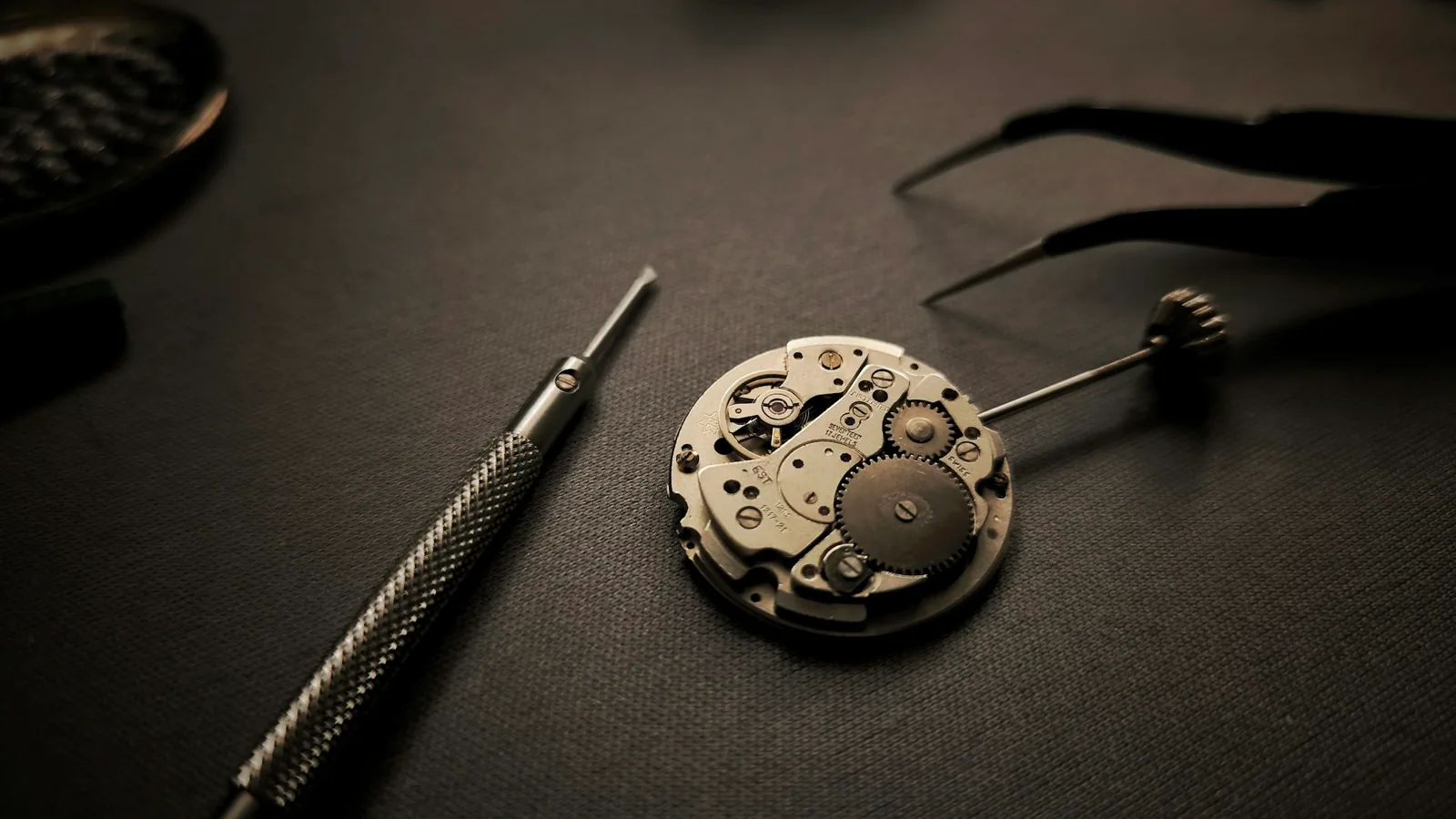
What damages a mechanical watch?
Water, magnets, heat, shocks and age. Strong magnetic fields, such as those from speakers, bag clasps and some phone cases, can magnetise the balance spring and make the watch run fast. A watchmaker can demagnetise it quickly. Sharp knocks can damage the balance staff. Heat and sudden temperature changes can affect lubricants and seals.
Sports with impact, such as golf and tennis, can shock the movement; take the watch off. Keep it away from cosmetics, sprays and solvents that can attack gaskets and straps.
A chronograph’s pushers add a specific habit worth building: avoid starting, stopping or resetting the stopwatch function underwater, even on a watch otherwise rated for swimming, unless the maker specifically says the pushers themselves are rated for that use, since they are a separate opening in the case from the crown and not automatically sealed to the same standard. On a mechanical chronograph, resetting the stopwatch hard against its stop, rather than letting it return smoothly, can also stress the reset mechanism over time; a smooth, unhurried press on each pusher is kinder to the movement than a hard jab.
Magnetism is easy to underestimate because it leaves no mark. ISO 764 sets the test for a watch marketed as antimagnetic: it must keep running within the watch’s stated accuracy after exposure to a direct-current magnetic field of 4,800 A/m (ISO 764, via Wikipedia’s summary of the standard). A watch with no antimagnetic rating has no guaranteed protection at all, so a handbag clasp, a laptop lid or a phone case with a magnetic catch held against the watch for even a few seconds can be enough to speed it up. Running noticeably fast, rather than slow, is the main sign; a watchmaker checks for it with a demagnetiser in seconds.
Heat has a stated limit on some watches, not just a general caution. Breitling’s own watch care guidance gives an operating range of 0°C to 50°C and says temperatures above 60°C can cause the watch, and particularly a battery in a quartz model, to malfunction; it also warns against thermal shock, such as going from a hot beach straight into cool water. A mechanical watch has no battery to fail, but the oils and seals age faster outside that kind of range, so a car dashboard in summer or a radiator shelf is worth avoiding even though nothing fails immediately.
| Threat | What actually happens | What reduces the risk |
|---|---|---|
| Magnetism | Balance spring magnetises, watch runs fast | Keep away from speakers, clasps, induction chargers; ask a watchmaker to check if it suddenly gains time |
| Heat and thermal shock | Lubricants thin or age faster, seals stress | Avoid direct sun, car dashboards, radiators and hot-to-cold transitions (Breitling) |
| Water beyond the rating | Moisture enters through a loose crown or aged gasket | Keep the crown pushed in or screwed down; have resistance tested periodically |
| Sharp knocks | Balance staff or jewels can crack or shift | Remove the watch for golf, tennis, DIY and manual work |
| Chemicals and cosmetics | Perfume, solvents and detergents can attack gaskets and straps | Put the watch on after applying scent or sunscreen, not before |
Sources: ISO 764 (antimagnetic watches), summarised via Wikipedia; Breitling, watch care and user tips. Checked 29 October 2026.
Can airport security damage a mechanical watch?
Not in the way many travellers assume. A watch retailer’s own explainer on the subject says airport X-ray scanners use extremely low doses of radiation, with an exposure too brief and too weak to harm a watch that is designed to withstand far higher levels in ordinary use, and that walk-through metal detectors and hand-held security wands produce a magnetic force too low, over too short a time, to magnetise a modern watch with reasonable magnetic resistance (Precision Watches, “Can airport security damage your watch?”, checked 29 October 2026). The same source says the bigger risk at security is physical, not electromagnetic: a watch placed in a tray alongside keys, coins and a belt buckle can pick up scratches or a knock far more easily than it can pick up magnetism from the scanner itself.
That still leaves two sensible habits for air travel. Keep the watch on your wrist through the scanner where airport rules allow it, rather than placing it in a tray with other metal objects, and if you do have to remove it, put it somewhere on its own, such as a pocket or a dedicated watch pouch, rather than loose among coins and keys. If a watch does start running fast after a flight, that is more likely to be an unrelated source of magnetism, such as a bag clasp or a laptop, picked up before or after the airport, and a watchmaker can check and fix it in minutes as described above.
Does the case material change how you should care for a watch?
Yes, and the differences are worth knowing before an accident happens, not after. A stainless steel case is the easiest to live with day to day: it tolerates knocks reasonably well and most light scuffs can be polished out later, at the cost described in how to tell if a watch has been polished. Titanium is lighter and more corrosion-resistant than steel, but it scratches and marks more readily on its finish, so a strap or bracelet worn against another metal bracelet can leave marks faster than on steel. Ceramic resists scratching far better than either, but trades that for brittleness: a UK watch retailer’s own guidance says ceramic “has the potential to be brittle” and is “not immune to shattering,” and that a ceramic watch dropped onto a hard surface may shatter even though its hardness makes it close to scratch-proof in ordinary wear (First Class Watches, “What is a Ceramic Watch?”, checked 29 October 2026). Chanel’s own care guidance for ceramic bracelets recommends monthly cleaning with soapy water and a soft-bristle brush, rinsed and dried thoroughly, with the crown kept pushed in or screwed down throughout (Chanel, watch care, checked 29 October 2026).
Bronze behaves differently again, because the case is meant to change. A UK retailer’s bronze-care guidance describes the metal oxidising into a patina, especially in humid conditions or near the sea, that is unique to the individual watch and is, in the retailer’s words, protective of the case underneath; it recommends a professional rather than an at-home polish if you want to remove or reduce the patina, since doing so leaves the case more exposed afterwards, and it advises storing the watch dry, out of direct contact with dust and moisture, rather than face-down or crown-down, to slow the process if you would rather let it develop more slowly (First Class Watches, “How to Take Care of a Bronze Watch”, checked 29 October 2026).
| Case material | Main strength | Main weakness | What that means day to day |
|---|---|---|---|
| Stainless steel | Tough, resists most knocks | Scratches and scuffs show, though they can usually be polished out | The easiest default; no special handling needed |
| Titanium | Light, corrosion-resistant | Marks more readily than steel | Keep away from other metal bracelets and hard surfaces |
| Ceramic | Very scratch-resistant | Can shatter or chip on a hard impact | Handle and store carefully; avoid drops onto hard surfaces |
| Gold | Resists corrosion well | Soft; dents and scratches easily | Store separately from harder metals and other jewellery |
| Bronze | Develops a protective patina | Patina changes the watch’s appearance over time, by design | Decide whether you want it; store dry if you want to slow it |
Sources: Chanel, watch care; First Class Watches, "What is a Ceramic Watch?" and "How to Take Care of a Bronze Watch"; Precision Watches, airport security. Checked 29 October 2026.
How often should a mechanical watch be serviced?
Follow the maker’s recommended interval, which differs by brand and movement. Breitling, for example, describes its complete service as disassembly, cleaning and replacing standard movement parts, reassembly, lubrication and adjustment, with all seals changed and the water resistance checked. It recommends a complete service every four to six years and a maintenance service every two years (Breitling service, checked 29 October 2026). Check the maker for your specific model.
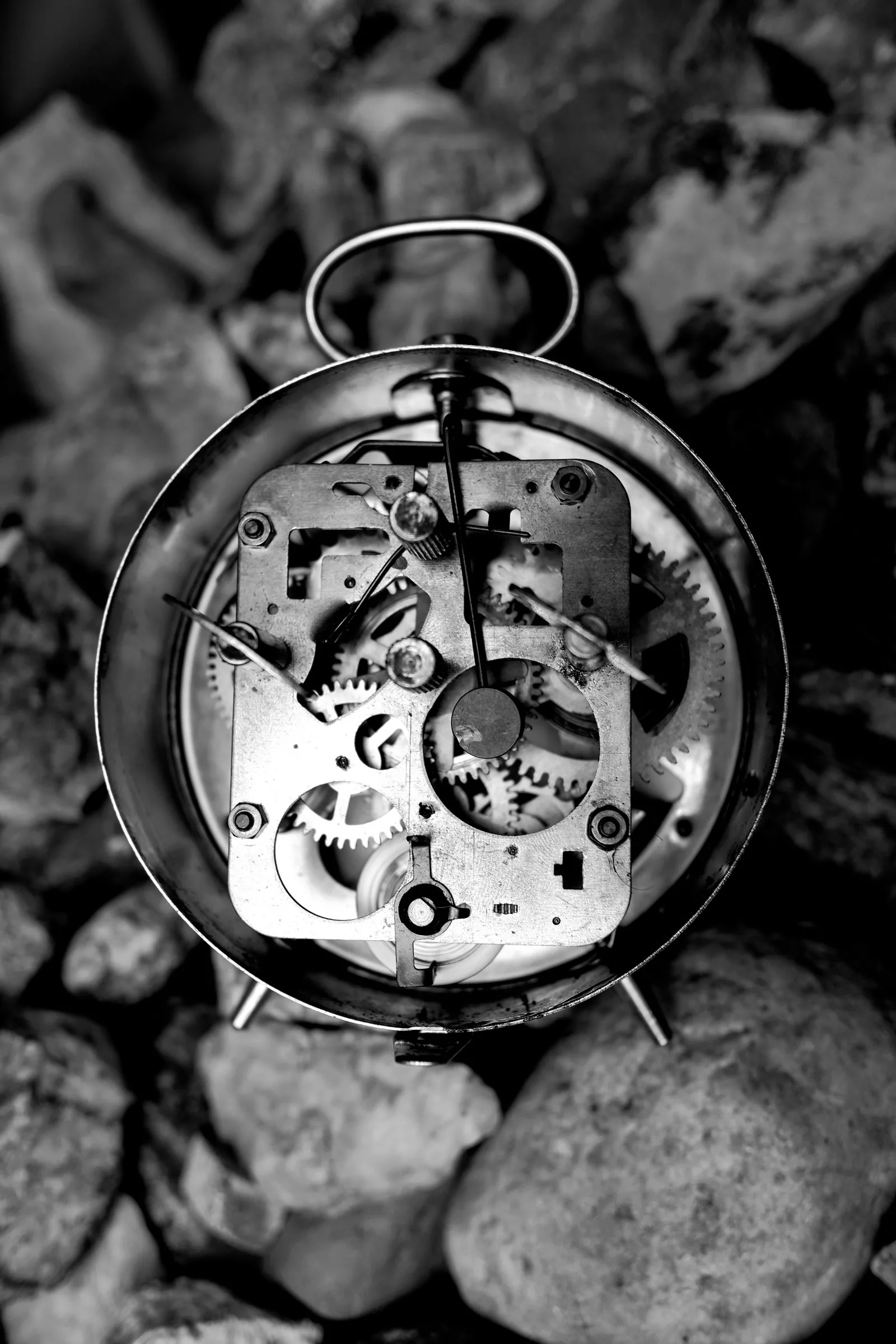
Cost depends on the brand and the complication, so ask the maker for a quote before you buy a pre-owned watch. For a pre-owned watch, ask when it was last serviced, by whom, and whether the invoice is available. A watch with no history may need a service soon after you buy; add that to the budget (see the guide to buying a luxury watch).
An authorised service centre may keep your warranty valid; unauthorised servicing may not. See watch warranty explained.
How should you store and clean a watch?
Store it in a dry place, away from direct sunlight and magnets, in a box or a pouch. A watch winder keeps an automatic running, but is not required. Clean the case and strap with a soft, slightly damp cloth, and dry it. Check the manual before using a brush or soap. Leather straps should not get wet. For insurance purposes, keep the box, papers and a record of the serial number somewhere other than the watch (watch insurance in the UK).
If the watch has been in chlorinated or salt water, even briefly and within its rating, Breitling’s care guidance recommends rinsing it under a gentle stream of fresh tap water afterwards and drying it with an absorbent cloth, rather than leaving the residue on the case and bracelet. It also lists perfume, cosmetics, sun cream, detergents and other solvents as things to keep off a leather strap specifically, since they can dry it out and loosen the stitching. For heavy sweating, swimming or very humid conditions, Breitling suggests a metal bracelet or rubber strap wears better than leather.
What if a watch is not going to be worn for several months?
An automatic watch left unworn simply runs down and stops once its power reserve is used up; nothing is damaged by sitting still, and lubricants age with time regardless of whether the watch is running, which is the reasoning behind a fixed service interval rather than a “wear it or lose it” rule. A hand-wound watch is no different in this respect, except that it has no self-winding mechanism to restart on its own once you pick it back up.
A few habits reduce the small risks that come with months of storage rather than days. Store the watch somewhere genuinely dry; a damp drawer or a bathroom cabinet, where humidity swings with every shower, is a worse choice than a dry room, because trapped moisture is what attacks a leather strap and can, over a long enough time, encourage the kind of gasket ageing covered above. If the strap is leather, consider removing it and storing it separately, or at least check it periodically for stiffening, cracking or a mould smell, since leather left motionless in a humid case or drawer is more prone to this than leather that gets regular air. When you do pick the watch back up after a long gap, wind it gently to a reasonable reserve before setting the time, check that the date and time functions move as expected, and if it has been more than the maker’s recommended service interval since it last ran, factor a service into your plans before relying on it daily again.
Frequently asked questions
Do I need to wind an automatic watch?
If you wear it daily, it winds itself. If it stops, wind it as the manual describes. If you are still choosing, our guide to mechanical vs quartz watches compares the upkeep.
Can I overwind a mechanical watch?
Modern watches have mechanisms to prevent damage. Do not force the crown past resistance.
Is it bad to leave a mechanical watch unworn?
Not usually. It stops when the power reserve runs out. Lubricants age with time, so periodic running or servicing is common advice.
Can I wear my watch in the shower?
Avoid it. Hot water and steam can affect seals and some straps.
How do I know if my watch is magnetised?
It runs fast by a noticeable amount. A watchmaker can test and fix it.
How often should I service it?
Follow the maker’s interval; a pre-owned watch with no history may need an earlier check.
Does servicing hurt the value of a watch?
This guide makes no claim about value. Replaced parts may matter to some buyers; ask the service centre.
Should I use an authorised service centre?
It is often needed to keep a warranty valid. Check your warranty terms.
Can airport X-ray scanners or metal detectors damage my watch?
Unlikely. Airport scanners use very low radiation and metal detectors produce a very weak magnetic field over a short time, both well within what a modern watch tolerates. Physical knocks in the security tray, against keys or coins, are a more realistic risk than the scanner itself.
Is a ceramic watch case more fragile than a steel one?
In one specific way, yes. Ceramic resists scratching far better than steel, but it is more brittle, and a hard impact, such as a drop onto a tiled floor, can chip or shatter it where steel would more likely just dent or scuff.
Do I need to do anything special if I’m not wearing my watch for months?
Store it somewhere dry, away from magnets and direct sunlight. It will simply stop once its power reserve runs down, with no damage from sitting still. If it has been longer than the maker’s service interval when you pick it back up, plan for a service before relying on it daily.
This page is general information. Follow your watch’s manual.
Sources (checked 29 October 2026)
- Maker’s manual and service guidance for your model.
- ISO 22810 (water-resistant watches).
- Seiko, 6R15 instruction manual.
- Breitling, service and watch care and user tips.
- ISO 764 (antimagnetic watches), summarised via Wikipedia.
- General watchmaking practice; no statistics are quoted.
- Precision Watches, “Can airport security damage your watch?”
- Chanel, watch care
- First Class Watches, “What is a Ceramic Watch?” and “How to Take Care of a Bronze Watch”
We check the facts in this guide against the sources named, and it is correct to the best of our knowledge as of October 2026. Rules, rates and sellers' terms change, so confirm the details with the seller, or with a professional, before you buy.