Watch condition grades are a seller’s own shorthand for how worn a watch is, usually from “unworn” down to “fair”. There is no universal standard behind the words, so the same label can describe different watches at different sellers. Treat a grade as a starting point for questions, and compare watches on photos and written detail, not on the label.
A condition grade is a label such as “excellent” or “good” that a seller applies to a pre-owned watch. This guide explains how to read them. It is general information, not legal advice.
What are watch condition grades?
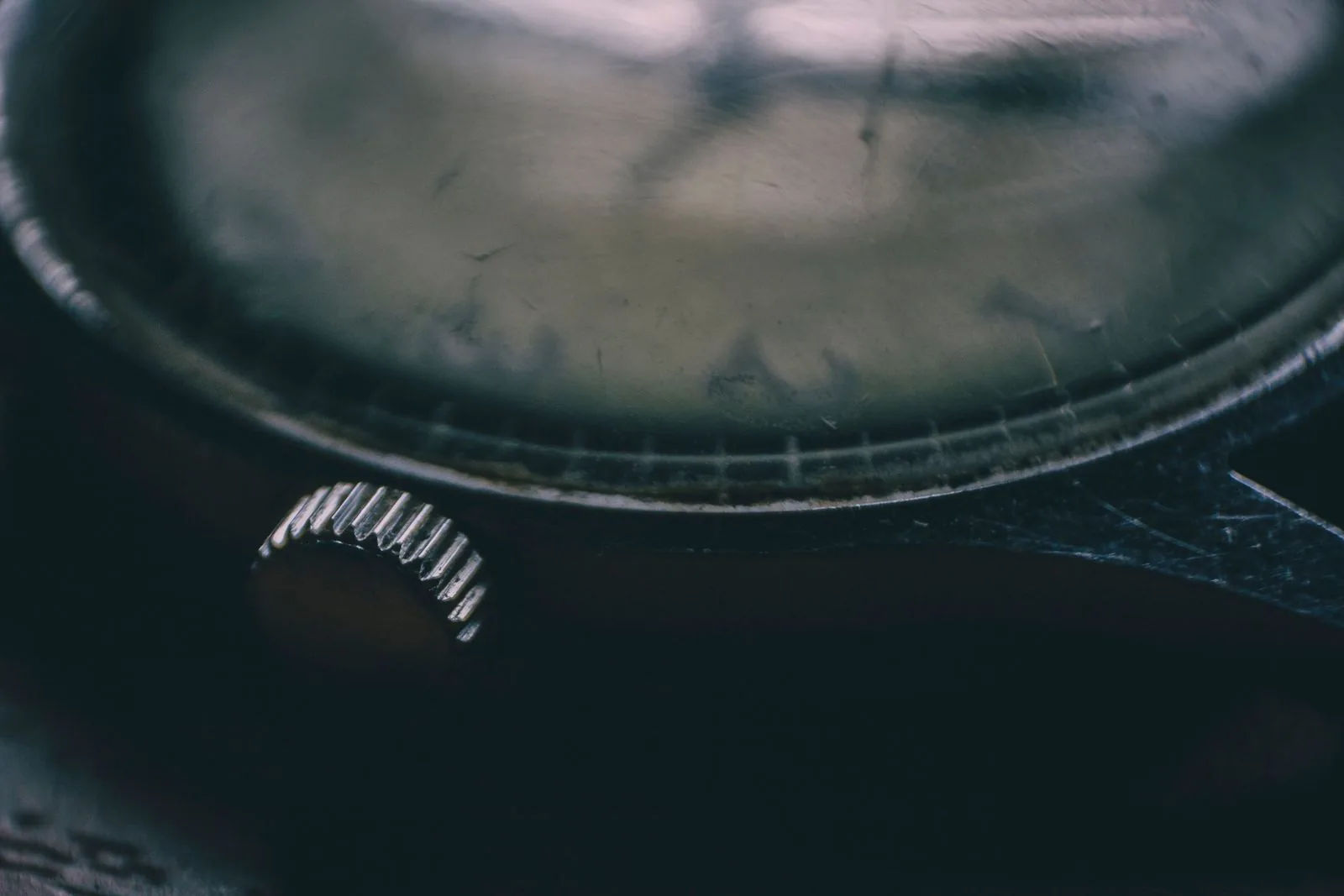
A condition grade is a short description of cosmetic and functional state: scratches on the case and crystal, wear on the bracelet, how much the case has been polished, and whether the watch runs correctly. Dealers and marketplaces use grades to speed up browsing. A grade is a claim by the seller, so it carries the same legal weight as any other description of the goods.
Is there a standard for watch condition grades?
No industry-wide grading standard exists, to my knowledge, and each dealer or platform sets its own scale. Some use five levels, some use letters, and some describe condition only in prose.
The legal side is clearer. Under the Consumer Rights Act 2015, a trader must supply goods that match their description (section 11) and are of satisfactory quality (section 9). Satisfactory quality means the standard a reasonable person would consider satisfactory, taking account of any description, the price and all other relevant circumstances, and in appropriate cases covers appearance and finish and freedom from minor defects (section 9). A seller who describes a watch as “excellent” and sends one with deep case damage has not met the description.
What do the common grades usually mean?
The table shows how grade words are commonly used and the questions each should prompt. These meanings are typical usage, not definitions you can rely on across sellers.
| Common label | Typical meaning | What to ask |
|---|---|---|
| Unworn / new old stock | No signs of wear; may have been displayed or tried on | Has it been worn? Are stickers and film present? Dated papers? |
| Excellent / like new | Very light wear, if any, visible on close inspection | Has the case been polished? Any hairline marks on the crystal? |
| Very good | Light scratches or small marks; clear signs of wear on the bracelet or clasp | Where are the marks? Is the bracelet stretched? |
| Good | Visible scratches and knocks; possibly polished | How much material has been removed from the case? |
| Fair / worn | Heavy wear, possible damage or non-original parts | What is not original? What does it need? |
Source: general trade usage; there is no cited standard.
Ask each seller for their own written definitions and compare listings only within the same scale.
How do real dealers define their own grades?
Five sellers’ own published grading pages show how differently the same word is used in practice.
Bob’s Watches, a US Rolex dealer, defines “Unworn” as “mint condition with no signs of wear,” “Excellent” as showing “very slight signs of wear,” “Very Good” as “light to normal wear by a careful owner,” and “Good” as showing “signs of wear and may have some minor scratches or marks on the case, bezel, or bracelet” while remaining in proper working order (Bob’s Watches, Rolex condition grading, checked 30 October 2026).
Antiquorum, the Swiss auction house, skips descriptive words for a numbered scale in its own published grading system: 1 is “as new,” 2 “very good,” 3 “good,” 4 “fair” and 5 “poor,” scored separately for the case, dial and movement, alongside dozens of extra codes for specific issues such as repolishing, replaced parts or a re-gilt dial (Antiquorum, grading system, Summer 2020 edition).
BeckerTime, a US dealer, grades on a 1-to-10 numeric scale instead: its “Mint Condition” band runs from 9.5 to 9.7, “Excellent Condition” from 7.0 to 8.5, and “Fair Condition” from 5.0 to 7.0, each band also carrying a timing tolerance, such as gaining or losing up to 30 seconds a day at “Excellent” (BeckerTime, timepiece condition grading scale, page last updated 11 September 2022).
A fourth scale attaches a number to the word. Classic Watch, a US vintage dealer, pairs seven descriptive grades with an approximate overall-condition percentage: New Old Stock at 98 to 100%, Mint at 95% or above, Near Mint at 90% or above, Excellent at 80% or above, Very Good at 70% or above, Good/Average at 50% or above, and Fair/Below Average below that, which it describes as “functional as a holding case only” and “not collectable except in very rare cases.” Its definitions turn partly on brassing: visible brass showing through where gold plating has worn away on a gold-filled case, which the dealer says should be absent at Mint and Near Mint, appears slightly at the back or lugs by Excellent, and spreads to the top of the case by Very Good. The dealer adds that its grades are “subjective” and that the listing photos are the real guide to condition (Classic Watch, grading page, checked 30 October 2026). Lay Classic Watch’s “Excellent” (80% or above, slight wear, slight brassing permitted) against Bob’s Watches’ “Excellent” (very slight signs of wear, no percentage given) and BeckerTime’s “Excellent” (7.0 to 8.5 out of 10, with a timing tolerance): three more differently calibrated uses of one word.
A fifth dealer, Swiss Time Pieces, uses only three bands and refuses to list anything below the top one. Its “Unworn” means essentially new, kept in the original box since purchase, with the condition confirmed by staff checking the case, bracelet and clasp. “Mint Condition” means a watch that has been worn but “looks immaculate,” which the dealer says its own servicing team may lightly polish to remove visible marks. “Excellent Condition” means subtle wear “consistent with careful use,” and on vintage pieces the dealer says it usually leaves these unpolished “to preserve their originality.” The page states plainly: “We do not offer any watches below Excellent Condition” (Swiss Time Pieces, our condition grading, checked 30 October 2026).
So “excellent” can mean “very slight signs of wear” at one dealer, 80% or above with some permitted brassing at another, a watch that may run 30 seconds a day off at a third, and a floor below which a fourth will not sell at all. None of these five scales is an industry standard; each is that one seller’s own definition, built differently, and none maps cleanly onto the others. Ask a seller which scale their listing uses, and do not assume it matches a scale you have seen elsewhere.
A worked example shows why this matters in practice. Say three dealers each list the same reference of steel chronograph, all marked “Excellent”: Dealer A uses a scale like Bob’s Watches, where “Excellent” sits one band below the top and means very slight signs of wear with the case unpolished; Dealer B uses a scale like BeckerTime’s numeric bands, where “Excellent Condition” spans 7.0 to 8.5 out of 10 and allows for a timing tolerance of up to 30 seconds a day; Dealer C uses a scale like Swiss Time Pieces, where “Excellent” is the lowest grade it sells at all, meaning the watch could be close to what another dealer would call “good.” Three identical-sounding listings, three different watches. This is illustrative only, built from the published scales above, not a real comparison of named dealers’ actual stock.
Does grading work differently for a vintage watch?
Partly, because some marks that would lower a modern watch’s grade raise a vintage one’s desirability instead. Dealers in vintage pieces often grade cosmetic condition and collectability separately, and the two can pull in opposite directions.
Bob’s Watches, in a separate guide to what it calls “desirable imperfections,” names three traits vintage Rolex buyers look for rather than avoid. A tropical dial is one that has changed colour over decades as its surface finish reacts to sunlight, heat and humidity, most famously turning from black to brown; because the ageing is uneven, no two examples look the same, even from the same production year. A ghost bezel (or faded bezel) is an aluminium bezel insert whose colour has washed out from sun, saltwater and rubbing; because many original inserts were swapped out during routine servicing over the decades, an original bezel that has faded evenly, without heavy scratching, is now scarce. Patina describes the colour change in tritium lume used on dials and hands from the early 1960s to the late 1990s, ranging from light cream to a deep “burnt pumpkin,” and an even, symmetrical patina across the hands and markers is read as a sign the dial and hands are original to the watch rather than later replacements (Bob’s Watches, “desirable imperfections,” checked 30 October 2026).
The practical effect is that heavy polishing, which a modern-watch grading scale might treat as neutral or even as an improvement, can strip away exactly the originality a vintage buyer is paying for. This is why Swiss Time Pieces says it usually leaves vintage pieces unpolished even at its “Excellent” grade, while Antiquorum’s numbered scale records repolishing, a replaced dial or a re-gilt dial as separate codes precisely because they change what the watch is worth, not just how shiny it looks (Antiquorum, grading system). Ask a vintage seller directly whether the dial, hands, bezel insert and bracelet are original to the watch, because a grade alone will not tell you.
What should you ask beyond the grade?
Ask questions that a grade hides. Request close, well-lit photos of the case flanks, lugs, crystal, crown, clasp and the bracelet where it joins the case. Ask whether the case has been polished, whether any parts have been replaced, and whether the watch has been serviced, with a date and who did it.
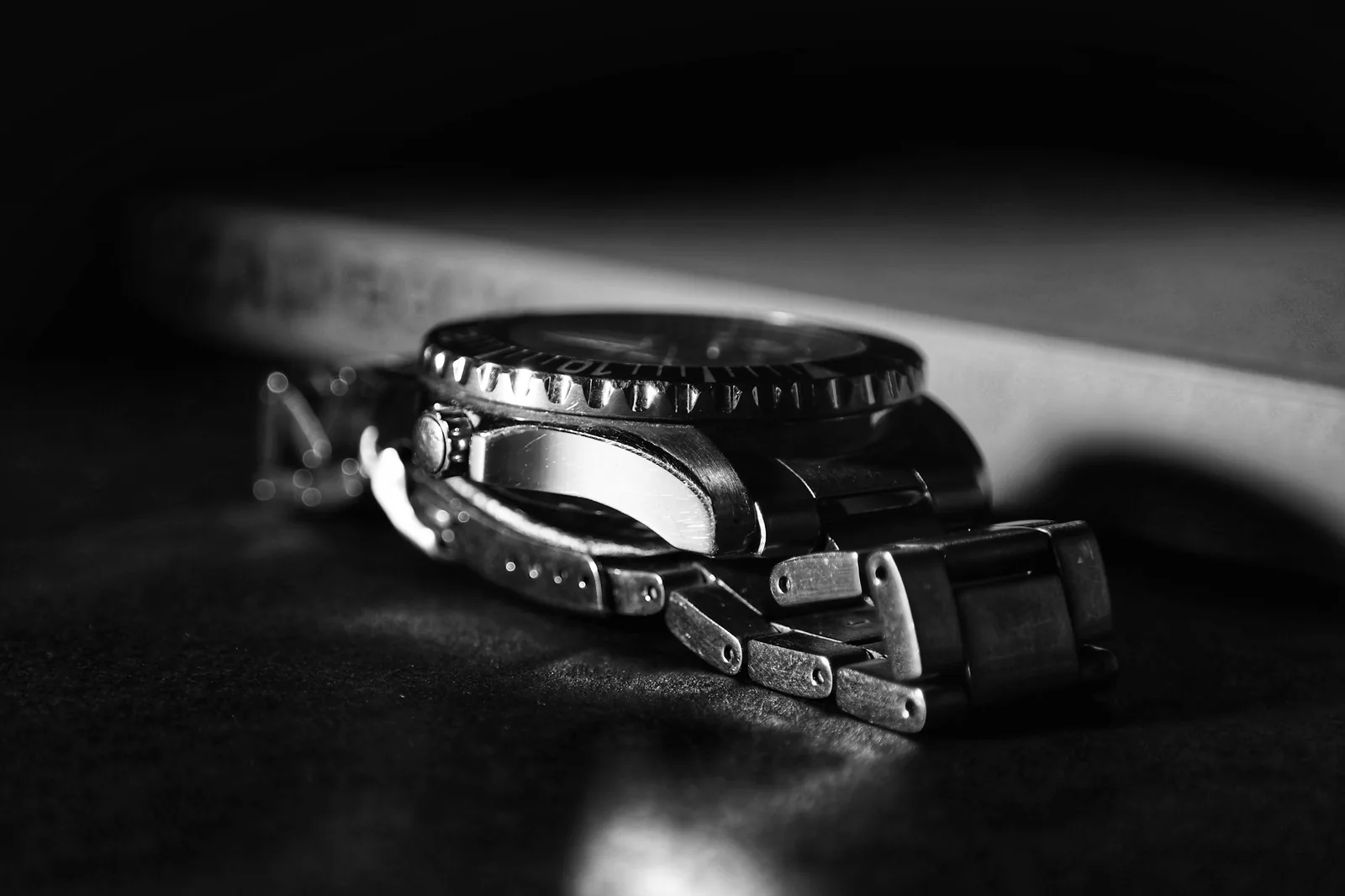
Then ask whether the watch comes with its box and papers; see what “full set” means. A watch with the same grade can sell for a different price depending on that alone.
Ask who graded the watch, and whether they handled it or worked from photos. A grade set by someone who physically inspected the case, bracelet and movement carries more weight than one set from photos supplied by a previous owner, which is sometimes how a marketplace listing, rather than a dealer’s own stock, gets its stated grade. If a platform allows third-party sellers to self-grade their own watches, ask whether the platform itself checks that grade before the listing goes live, or whether it is taken on trust from the seller. Antiquorum’s numbered scale, by contrast, is applied by the auction house’s own specialists as part of a formal condition report, which is one reason its codes for repolishing or replaced parts carry weight: they come from someone who opened and examined the watch, not from a seller’s own description.
Does polishing and servicing change the grade?
Yes, but not always in the way sellers state. Polishing can remove light scratches and make a case look better in photos, but it removes metal, which can soften edges and engraved details. A service restores the movement; it does not change the cosmetic state. Some sellers grade the cosmetic appearance only, and some include whether the watch has been polished.
Ask for the service history in writing. If you plan to keep the watch, read how to care for a mechanical watch for what a service involves and how often it is usually needed.
Does “running” mean the same as “accurate”? No, and a cosmetic grade rarely tells you which one a seller means. BeckerTime’s numeric scale is unusual in attaching a timing tolerance to each cosmetic band: its “Excellent Condition” (7.0 to 8.5) allows the watch to gain or lose up to 30 seconds a day, which is a looser standard than COSC chronometer certification, where a tested movement must stay within minus 4 to plus 6 seconds a day before it leaves the factory (COSC; see what COSC certification means for how that test works). A watch that is “running” simply ticks; a watch within a stated timing tolerance has been checked against it. If accuracy matters to you, ask the seller for the watch’s measured daily rate, not just confirmation that it runs, and ask when it was last timed.
What if the watch is worse than the grade?
If you bought from a trader, you can rely on the description. The Consumer Rights Act gives a short-term right to reject goods that are not as described within 30 days (section 22). Photograph the problem straight away and contact the seller in writing, quoting the listing. If you cancel under a distance sale, you have 14 days from delivery (GOV.UK).
Keep a written record of the exact wording the seller used, not just your memory of it, since a dispute often comes down to what was actually written in the listing against what arrived. Screenshot the listing at the time of purchase if you can, including the stated grade, the photographs shown and any written description of condition, because listings can be edited or removed after a sale. If the seller disputes your account of what was advertised, a dated screenshot is stronger evidence than a recollection of what the page said.
Private sellers owe you only that the watch matches its description (Which?), so keep a copy of the advert. The full rights picture is in consumer rights when buying a watch online in the UK. For the whole buying process, go back to the guide to buying a luxury watch.
Frequently asked questions
What is the best condition grade for a pre-owned watch?
“Unworn” is usually the top label, then “excellent” or “like new”. Grades vary by seller, so check the photos.
Is there an official watch grading system?
Not that I have found; each seller uses its own.
Does “like new” mean the watch was never worn?
No. It usually means very little visible wear. Ask whether it has been worn.
Should I avoid a polished watch?
Not necessarily, but ask how much it has been polished. Heavy polishing softens case edges.
What does “NOS” mean?
New old stock: an unworn watch from past production that was never sold. See the glossary.
Does the grade include the movement?
Often not. Ask separately about running, accuracy and service history.
Can I return a watch that is worse than described?
From a trader, yes: you can reject within 30 days if it is not as described (CRA s22).
Do I need photos if the seller gives a grade?
Yes. A grade is the seller’s opinion; photos let you judge.
What is “brassing” on a watch case?
Visible brass showing through where gold plating has worn away on a gold-filled case, usually first at the back or the lug bottoms. Classic Watch, a vintage dealer, treats the amount of brassing as one of the things that separates its “Mint,” “Excellent” and “Very Good” grades.
Why do vintage dealers sometimes leave a watch unpolished even at a high grade?
Because polishing removes metal and can erase traits collectors value, such as an original faded bezel, a tropical dial or even tritium patina. A dealer may hold a high cosmetic grade while deliberately not polishing a vintage piece, to keep it original. Ask whether the dial, hands, bezel and bracelet are original before you rely on the grade alone.
Does the grade affect the price?
Usually, yes, but compare like with like. This guide makes no claims about what any watch is worth. A grade you can question is useful when you negotiate the price of a watch.
This page is general information, not legal advice.
Sources (checked 29 October 2026)
- Consumer Rights Act 2015, section 9, section 11 and section 22
- GOV.UK, online and distance selling
- Which?, rights when buying second-hand goods
- Bob’s Watches, Rolex condition grading (checked 30 October 2026)
- Antiquorum, grading system (Summer 2020 edition)
- BeckerTime, timepiece condition grading scale (page last updated 11 September 2022)
- Swiss Time Pieces, our condition grading (checked 30 October 2026)
- Bob’s Watches, desirable imperfections (checked 30 October 2026)
- Classic Watch, grading (checked 30 October 2026)
We check the facts in this guide against the sources named, and it is correct to the best of our knowledge as of October 2026. Rules, rates and sellers' terms change, so confirm the details with the seller, or with a professional, before you buy.