Watch60 is independent and not affiliated with COSC or any watch brand.
COSC certification is a precision test for Swiss watch movements. The Contrôle Officiel Suisse des Chronomètres (COSC) runs each movement through 12 to 20 days of checks in different positions and temperatures, and a movement that meets all the criteria may be called a “chronometer”. It tells you the movement passed a lab test once. It does not tell you how the watch runs today.
This guide uses COSC’s own published material and is general information. “COSC certified” and “chronometer” are not the only quality claims you will see on a dial or in a listing: some brands run their own, separate in-house standard alongside or instead of COSC, and the two kinds of claim are not automatically comparable, as the table further down this page sets out.
What is COSC certification?
COSC certification is an official accuracy test that entitles a Swiss watch or movement to be called a chronometer. COSC is a non-profit association founded in 1973. It runs three laboratories in Biel/Bienne, Le Locle and Saint-Imier, with management in La Chaux-de-Fonds (COSC FAQ).
A chronometer is a watch whose movement has passed a precision test run by a neutral official body. COSC was set up by five cantons and the Federation of the Swiss Watch Industry (COSC, our story).
Mechanical wristwatch movements are tested against ISO 3159, the international standard for wrist chronometers with a balance-spring oscillator. Quartz movements follow COSC’s own rules, which are based on ISO 3159 but adapted to quartz (COSC, Chronometer Certified). COSC’s 2025 annual report notes that ISO 3159 has been in force since 1976.
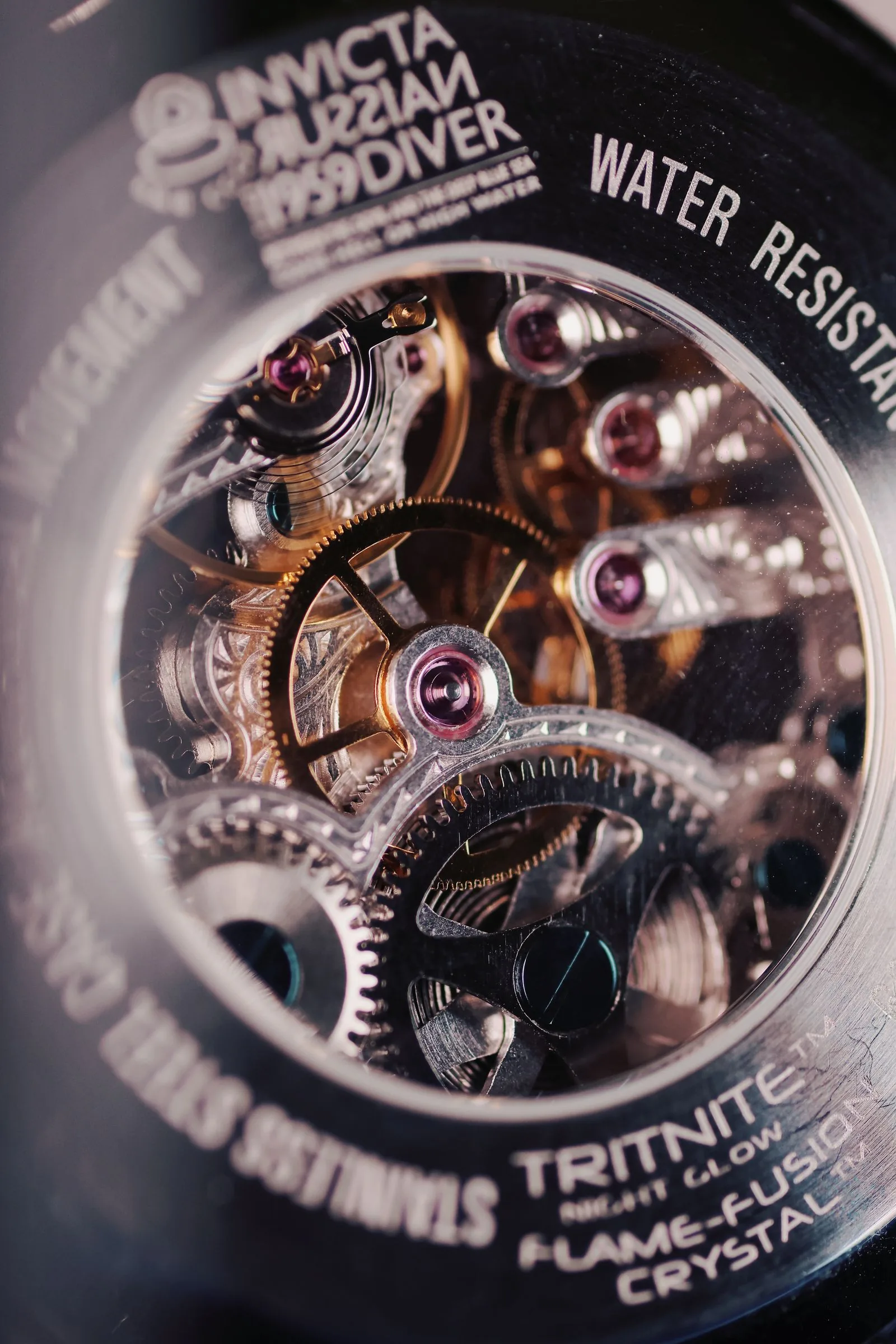
COSC issued 2,071,707 certificates in 2025, almost all for mechanical movements (COSC annual report 2025, in French).
What does COSC certified mean on a watch?
A COSC certified watch means its movement passed all seven ISO 3159 criteria during testing. Each certified movement carries a unique engraved number and can be issued with a COSC certificate. Many brands also print “chronometer” or “Chronometer Certified” on the dial (COSC).
The best-known figure is the average daily rate: for a mechanical chronometer, between −4 and +6 seconds a day over the first ten days of testing (COSC FAQ). COSC says the title is “acquired for life, even if one’s performance is likely to change somewhat over time”.
For the difference in accuracy between mechanical and battery watches, see mechanical vs quartz watches.
How does COSC test a chronometer?
COSC tests movements for 12 to 20 days, depending on the type. The movements are wound daily, set in five positions and held at three temperatures, and their rate is measured each day. At the end, a calculation checks them against seven criteria. A movement must meet all seven to pass.
The schedule for mechanical movements, from COSC’s published process:
| Stage | Days | What happens |
|---|---|---|
| Arrival | Day 1 | Engraved numbers checked; movements rest at 23°C for 12 hours |
| Position tests | Days 2–10 | Rate measured in 24-hour cycles; position changes daily: 6 o’clock, 3 o’clock, 9 o’clock, dial up, dial down |
| Temperature tests | Days 11–13 | Dial up, at 8°C, 23°C and 38°C for 24 hours each |
| Final measurement | Days 14–15 | Measured at the 6 o’clock position |
| Analysis | Days 16–20 | Results checked against the seven criteria; certificate created |
Source: COSC, "Chronometer Certified" (checked 29 October 2026).
The seven criteria, in COSC’s words, are:
- Average daily rate (−4 to +6 seconds a day)
- Rate variation as a function of temperature
- Rate resumption
- Greatest difference in rates
- Difference between rates in horizontal and vertical positions
- Greatest variation in rates
- Mean rate variation
COSC’s pages give a figure only for the first; the other limits are in ISO 3159.
The standard test is done on the movement before it is cased. COSC also describes a newer title, “Excellence Chronometer Certified”, where the cased watch gets at least four more days of tests, including simulated wear and a 200 gauss magnetic field (COSC). Ask which title a seller means.
What does a −4/+6 seconds a day tolerance actually mean in practice?
The average daily rate criterion sounds like a tight figure, and worked out over a longer period it is tighter than it first looks, but it is also wider than some buyers assume. If a chronometer ran at the slow end of its tolerance, losing 4 seconds every day without being reset, it would be roughly 2 minutes slow after a month and around 24 minutes slow after a year. At the fast end, gaining 6 seconds a day, it would run about 3 minutes fast after a month and roughly 36 minutes fast after a year. In practice almost all certified movements run much closer to the middle of that range in day-to-day wear, and wearers generally reset the time occasionally rather than letting a drift accumulate for a full year, but the arithmetic is a useful reality check against the idea that “chronometer” means a watch that never needs adjusting.
Are there certifications tighter than standard COSC?
Yes, and several brands market their own, stricter in-house standard alongside or instead of COSC. The table below gives named examples; figures are as publicly described by each source and should be checked against the brand’s current claims, since standards have changed before and can change again.
| Certification | Who sets it | Accuracy claimed | Other tests included |
|---|---|---|---|
| Standard COSC (ISO 3159) | COSC, external to the brand | −4 to +6 seconds a day, uncased movement | The seven criteria above |
| Rolex Superlative Chronometer | Rolex, in-house, beyond COSC | −2/+2 seconds a day, on the cased, finished watch | Rolex’s own tests of power reserve, self-winding and waterproofness, not independently verified by an external body (timeandtidewatches.com, checked 29 October 2026) |
| Omega Master Chronometer (METAS) | Swiss Federal Institute of Metrology (METAS), external to Omega | 0/+5 seconds a day | Resistance to a 15,000 gauss magnetic field, power reserve checks, and a water-resistance test to 150 bar, across eight separate tests (Quill & Pad, checked 29 October 2026) |
| Patek Philippe Seal | Patek Philippe, in-house | −3 to +2 seconds a day | 19 days of testing in six positions, including a wear simulation and water resistance (WatchTime, checked 29 October 2026) |
| Grand Seiko in-house standard | Seiko/Grand Seiko, in-house | −3 to +5 seconds a day | Six positions over 17 days (WatchTime, checked 29 October 2026) |
| Geneva Seal (Poinçon de Genève) | Timelab, tied to Geneva-based manufacture | No more than 1 minute lost over 7 days on the cased watch | Movement finishing inspected against a published list of criteria, plus complications, water resistance and power reserve (WatchTime, checked 29 October 2026) |
| Fleurier Quality Foundation seal | Fleurier Quality Foundation | Gains of 0 to +5 seconds over 24 hours in the “Fleuritest” | Entirely Swiss-made requirement, COSC certification, and a simulated-wear test using a robotic arm (WatchTime, checked 29 October 2026) |
Sources as named in the table, checked 29 October 2026; figures are as each source describes them and brands can revise their own standards.
Two things are worth drawing out of this table. First, “tighter than COSC” is a genuinely mixed bag: some of these standards (Rolex, Omega, Patek Philippe) test a narrower rate range than COSC’s −4/+6, while others add entirely different checks, such as magnetic resistance or simulated wear, that COSC’s own test does not cover at all. Second, only some of these are independently verified the way COSC is: Omega’s METAS certification is run by an external Swiss government body, in the same way COSC is an external, neutral tester, while a brand’s own in-house standard, however demanding on paper, is tested and policed by the brand itself. That is not a reason to dismiss an in-house standard, but it is a reason to understand what “certified” means in each case before treating two different “chronometer” claims as directly comparable.
Chronometer vs chronograph: what is the difference?
A chronometer is a watch that has passed a precision test. A chronograph is a watch with a stopwatch function for timing an interval. The words look alike but describe different things, and a watch can be one, both or neither.
| Chronometer | Chronograph | |
|---|---|---|
| What it is | A precision-tested watch or movement | A complication that measures elapsed time |
| Who decides | A neutral official body, such as COSC | The maker, by fitting the function |
| Standard | ISO 3159 for mechanical wristwatches | COSC says no precision standard exists for chronographs |
| Can a watch be both? | Yes. A chronograph movement can be certified as a chronometer |
Source: COSC, "Chronograph or Chronometer?" and FAQ (checked 29 October 2026).
Other terms you will see in listings are in our watch terms glossary.
Is a Rolex Superlative Chronometer still COSC certified?
Yes. The Federation of the Swiss Watch Industry describes Rolex’s own process as starting with COSC certification of the uncased movement after the standard testing period, with Rolex’s own Superlative Chronometer tests then applied afterwards, on the cased, finished watch, and described as complementing rather than replacing the COSC result (FHS, “The Oyster, a superlative chronometer”, checked 29 October 2026). A Rolex that carries the Superlative Chronometer designation has therefore passed COSC’s test as a baseline before Rolex’s own, additional checks are applied; the two are not alternatives to each other.
Which brands submit the most movements to COSC?
Rolex has historically been by far COSC’s largest single source of submissions. One trade report, using COSC’s own 2012 figures, recorded Rolex submitting 799,000 of the 1,732,526 movements COSC tested that year, roughly 46% of the total, with Omega’s 526,000 and Breitling’s 157,000 well behind (Beckertime, citing COSC data, checked 29 October 2026; figures are from 2012 and will have moved on since). That report also noted that certified movements then represented fewer than 3% of Swiss-manufactured watches overall, since most Swiss watches, including many good-quality ones, are never submitted for testing at all. More recent context is in COSC’s own 2025 annual report, cited above, which records over two million certificates issued that year without breaking the total down by brand.
The scale of Rolex’s submissions is one reason “chronometer” and “Rolex” are so often associated in buyers’ minds, but it does not mean other brands’ COSC-certified movements are tested any differently; the same seven criteria and the same test schedule apply to every submission, whatever the brand’s name on the dial.
Does COSC certification matter on a pre-owned watch?
On a pre-owned watch, COSC certification tells you the movement met a published standard when it was new. It says nothing about servicing, wear or damage since. A chronometer that has gone years without a service may run well outside its original figures, so judge the watch on its current condition and service history.
A watchmaker’s timing check today tells you more than a lab result from years ago. Our guide to looking after a mechanical watch covers servicing and what to ask about it.
If major movement parts are replaced, a chronometer can be retested, but only the brand can request it (COSC FAQ).
Who made the movement has no bearing on certification; COSC certifies for over 60 brands (COSC). Our guide to in-house and outsourced movements explains why the source matters more for servicing.
How do you check a watch is COSC certified?
Start with the dial and the paperwork. COSC suggests looking for the “chronometer” designation on the watch, and says certified watches are usually, but not always, sold with a certificate. If in doubt, contact the brand’s head office. COSC will not release a watch’s results to buyers (COSC FAQ).
- Dial wording. Does it match the title the listing claims?
- Certificate. Certificates are optional, so a missing one is not a warning on its own. List it with the box contents, as in what “full set” means.
- Service history. When was it last serviced, and was the rate checked?
- The brand. COSC keeps results for ten years and issues duplicates only at the brand’s request.
Dial text is easy to copy, so the word “chronometer” does not prove a watch is genuine. See how to spot a fake watch for the other checks.

Frequently asked questions
What does COSC stand for?
Contrôle Officiel Suisse des Chronomètres, the Official Swiss Chronometer Testing Authority. It is a non-profit association founded in 1973 (COSC).
Does COSC certification expire?
No. COSC compares it to a university degree: it is earned once, for life, even though the watch’s performance may change over time.
Is every chronograph a chronometer?
No. A chronograph is a stopwatch function. It is only a chronometer if its movement has also passed the precision test.
Can quartz watches be COSC certified?
Yes. COSC certifies quartz wristwatches against its own rules, which are based on ISO 3159 but adapted to quartz.
Can I get my watch’s test results from COSC?
No. COSC says the results belong to the brand, so contact the brand’s head office.
What if the COSC certificate is lost?
COSC can issue one duplicate, at the brand’s request. After that, only a new test arranged by the brand will produce a certificate.
Does servicing cancel COSC certification?
No. The title stays. If major movement parts are replaced, the brand can have the watch tested again.
How many movements fail COSC testing?
In 2025, 4.7% of the pieces submitted failed or were refused for other reasons, according to COSC’s annual report.
What does a −4/+6 seconds a day rate add up to over a year?
Running continuously at the slow end, a watch would lose roughly 24 minutes over a year; at the fast end, it would gain roughly 36 minutes. Most certified watches run closer to the middle of that range, and most wearers reset the time occasionally rather than letting drift build up over twelve months.
Is Rolex’s Superlative Chronometer the same thing as COSC certification?
No, but it includes it. Rolex submits movements to COSC for standard certification first, then applies its own, stricter in-house tests to the cased watch afterwards, including a −2/+2 seconds a day limit. The two are described by the Federation of the Swiss Watch Industry as complementary, not alternatives.
Is Omega’s Master Chronometer the same as COSC?
No. It is a separate certification run by METAS, the Swiss Federal Institute of Metrology, testing the cased watch against an accuracy limit of 0/+5 seconds a day and resistance to a 15,000 gauss magnetic field, among eight tests in total, in addition to the watch’s COSC certification.
Which brand submits the most movements to COSC?
Rolex has historically submitted far more movements than any other brand. One report of COSC’s 2012 figures put Rolex at roughly 46% of that year’s total submissions, with Omega and Breitling well behind; current figures are not broken down by brand in COSC’s published annual reports.
This page is general information, not technical or financial advice.
Sources (checked 29 October 2026)
- COSC, FAQ
- COSC, “Chronometer Certified” (test stages and the seven criteria)
- COSC, “Chronograph or Chronometer?”
- COSC, “Excellence Chronometer Certified”
- COSC, our story and homepage (number of brands certified)
- COSC, annual report 2025 (in French, dated 21 May 2026; certificates issued and failure rate)
- ISO, ISO 3159, wrist-chronometers with spring balance oscillator. The page refused automated access on 29 October 2026
- Federation of the Swiss Watch Industry, “The Oyster, a superlative chronometer” (Rolex’s COSC-plus-in-house process)
- timeandtidewatches.com, what is the Rolex Superlative Chronometer standard
- Quill & Pad, all you need to know about Omega’s METAS Master Chronometer testing
- WatchTime, who tested your watch: a guide to the watch industry’s quality marks (Geneva Seal, Fleurier Quality Foundation, Patek Philippe Seal, Grand Seiko)
- Beckertime, citing COSC’s 2012 submission figures, Rolex tops COSC testing again
We check the facts in this guide against the sources named, and it is correct to the best of our knowledge as of October 2026. Rules, rates and sellers' terms change, so confirm the details with the seller, or with a professional, before you buy.