Watch serial numbers explained in one line: the reference number tells you which model a watch is, the serial number tells you which individual watch it is, and the calibre number tells you which movement design is inside. Buyers use the reference to compare like with like, and the serial to match the watch to its papers and to search stolen-watch registers.
A serial number is a unique number a maker gives one watch, usually engraved on the case. A reference number is the maker’s code for a model and its variant. A calibre is the movement model. This page explains each, where makers put them, and how to use them when you buy.
What are watch serial numbers, and how do they differ from reference numbers?
A watch serial number identifies one watch; a reference number identifies a model shared by many watches. Two watches of the same reference look alike and carry the same reference, but each has its own serial. Sellers quote the reference to describe what they are selling; registers, warranties and archives use the serial to identify a single piece.
Makers build their reference codes differently. Omega, for example, uses a 14-digit Long Product Identification Code (PIC) in six groups: the first identifies the watch family, and later groups cover the case and bracelet materials, case size, calibre, dial and a sequence number (Omega). Omega’s warranty cards carry the serial number, which Omega describes as an 8-digit numeric or 7-digit alphanumeric number (Omega).
Patek Philippe’s Certificate of Origin lists the movement, case and reference numbers separately (Patek Philippe), which shows how a single watch can carry several identifiers.
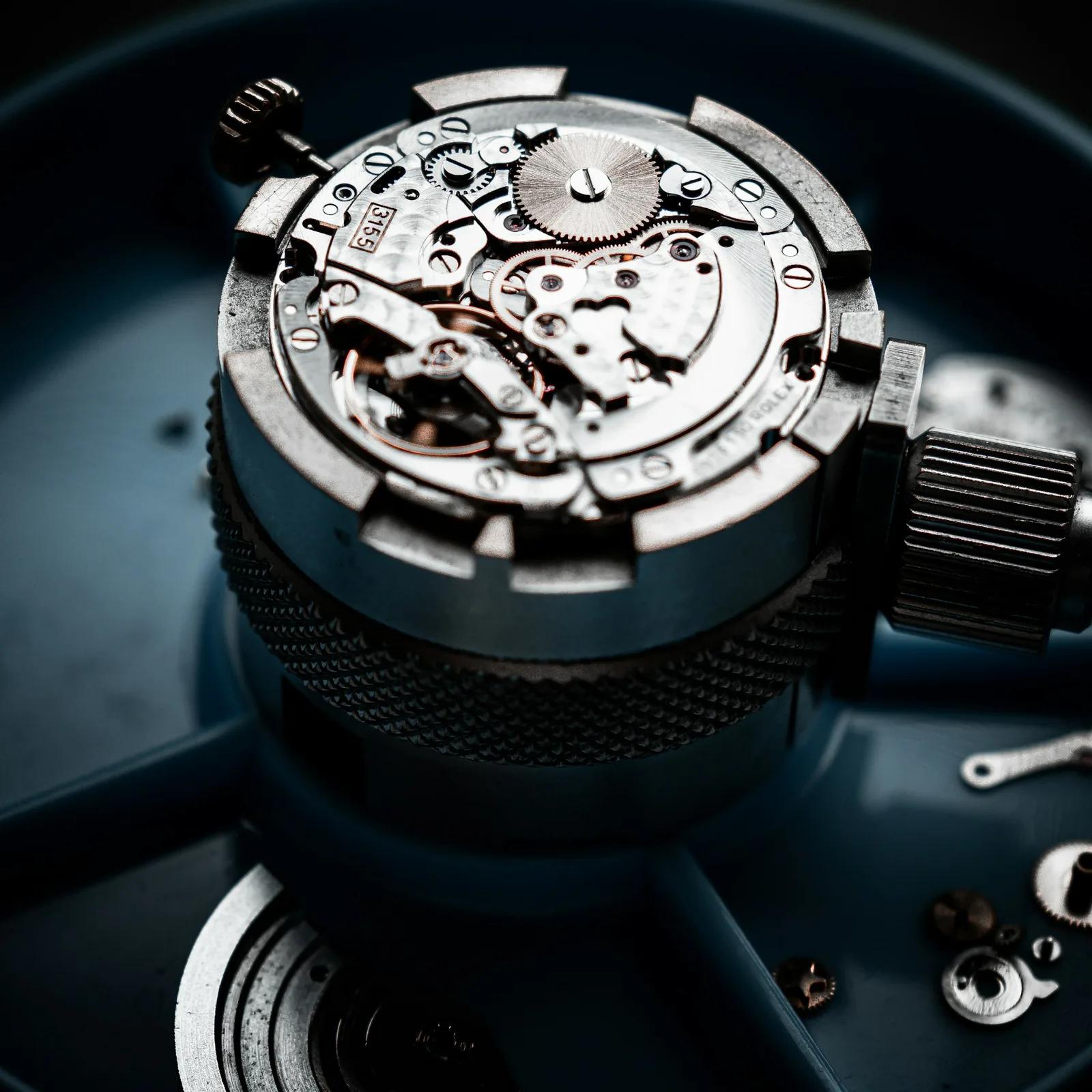
What is a calibre number?
A calibre number names the movement design, not the individual movement. Every watch built with the same calibre shares that number, in the way that cars share an engine code. In Omega’s PIC, the fourth group of digits refers to the calibre that powers the watch (Omega).
Some movements also carry their own individual number. COSC, the Swiss chronometer testing office, says each certified chronometer is identified by a unique number engraved on its movement and comes with a COSC certificate (COSC). See what COSC certification means for what the test covers. Movement numbers usually need a watchmaker to read, because the case has to be opened.

How are reference numbers built? Rolex, Patek Philippe and Audemars Piguet examples
Neither brand publishes an official key to its own reference numbers, so the structures below are as documented by specialist dealers and watch press, not brand-confirmed rules, and both sources note genuine exceptions exist.
Rolex. Older references have four digits; current ones mostly have six, because the model portion of the code grew from two digits to four. Reading one left to right: the leading digits identify the model or collection, though some models share more than one prefix; the next digit commonly encodes the bezel type (0 for smooth or domed, 1 for engine-turned, 2 for engraved, 3 for fluted, 4 for a textured or “bark” finish, 6 for rotatable); and the final digit commonly encodes the case material (0 for steel, 5 for Everose gold, 6 for platinum, 8 for 18k yellow gold, 9 for 18k white gold, with 1 to 4 covering Rolex’s two-tone “Rolesor” and “Rolesium” combinations). A reference beginning 140 is used across more than one model, including the Submariner, Air-King and Oyster Perpetual, so the prefix alone does not always pin down the model; 182 denotes a Day-Date, and newer Day-Date watches use 282 instead (Luxe Watches, “the meaning of Rolex reference numbers,” checked 30 October 2026). Because the scheme has no official published key, treat any reading of a Rolex reference as a strong indication, not proof, and confirm the model from the dial, case and papers together.
Patek Philippe. Patek’s references follow a documented pattern of model, an optional attribute code, a metal code and a dial code: a four-digit model number; an optional code after a slash describing the bracelet, case or dial, where “/1” means a metal bracelet and higher codes such as “/400” or “/600” denote gem-setting or enamel work; a letter or letter pair for the case metal, drawn from French names (A for steel, J for yellow gold, G for white gold, from “gris,” R for rose gold, P for platinum, T for titanium, and two letters for a two-tone case); and a three-digit suffix after a hyphen marking which dial version it is, where “-001” is the first and “-010” the second, without saying anything about colour. As worked examples: reference 5711/1A-010 is the steel Nautilus on a bracelet with the second dial version, the blue dial introduced after a 2006 update, while 5711/1A-011 is the white-dial version that followed it; 5712/1R-001 (bracelet) and 5712R-001 (strap) are the same rose gold Nautilus Moon Phase, differing only in whether a bracelet attribute code is present (Wristaficionado, “the ultimate guide to Patek Philippe reference numbers,” checked 30 October 2026). The same source stresses these are guidelines, not strict rules, since limited editions and older references sometimes break the pattern.
Audemars Piguet, unusually, publishes some of its own numbering history. Audemars Piguet’s own archive site explains that model, or reference, numbers were introduced in 1951 to identify a watch’s model, and were originally four digits; a fifth digit was added in 1984–85, so that older four-digit references were renamed under what the brand calls a “root reference” (its reference 5402, for example, became 25402). Two-letter suffixes were added to show the case material, such as “BA” for yellow gold or “ST” for steel, with further codes for the bracelet or strap, dial, gem-setting and finishing. Ranges of numbers were also grouped by category; a 1997 study the brand cites put complicated watches in the 5500 to 5599 range (Audemars Piguet, AP Chronicles, checked 30 October 2026). Separately from the model number, Audemars Piguet engraves a movement number on the movement’s baseplate or a bridge and a case number on the caseback or inside the case; the two numbers matched until 1951, when cases began their own sequence starting at 101, later gaining their own letter prefix. In 2017 the brand moved to a format of two letters followed by four digits for both the movement and case numbering, while leaving the model-number system unchanged.
Audemars Piguet is the exception that makes the point: because it is brand-published, its history can be dated and quoted with more confidence than Rolex’s or Patek Philippe’s reference schemes, which are maintained by outside observation. The gap between a brand-confirmed numbering history and a dealer-reconstructed one is itself worth knowing before you treat any reference decoding as definitive.
The practical point for a buyer is the same for all three brands: a reference number is a strong clue to what you are looking at, usually built up over decades of dealer and collector observation rather than a brand-published manual, so use it alongside the dial, box and papers rather than instead of them.
Where do you find the numbers on a watch?
It depends on the maker and the age of the watch. On current watches the serial is usually engraved on the outside of the case, often on the caseback, a lug or the inner bezel ring; on older watches it is often inside the caseback or on the movement. The papers should carry the same numbers, which is the easiest place to start.
| Number | What it identifies | Where makers put it (examples) | Source |
|---|---|---|---|
| Serial number | One individual watch | Omega: on the back or a lug of current watches; usually inside the caseback and on the movement of vintage ones. Rolex: between the lugs at 6 o’clock before 2007, on the inner bezel ring at 6 o’clock from 2007. Cartier: engraved on the case | Omega; Fratello, 2020; Cartier |
| Reference number | A model and its variant | On the warranty card and papers; on some watches also on the case | Omega; Patek Philippe |
| Calibre | The movement design | On the movement; in Omega’s PIC as the fourth group | Omega |
| Movement number | One individual movement | Engraved on the movement of each COSC-certified chronometer; listed on Patek Philippe’s Certificate of Origin | COSC; Patek Philippe |
| Clasp code | A code on the bracelet clasp | Rolex: engraved on the clasp | Fratello, 2020 |
Sources: Omega, customer service FAQ; Fratello, How to buy a pre-owned Rolex (Robert-Jan Broer, 13 November 2020); Cartier, International Warranty; COSC, certified chronometer; Patek Philippe, Extract from the Archives FAQ. Checked 29 October 2026. Other brands place numbers differently.
Do not open a caseback yourself to find a number. Ask the seller for a clear photo, or a watchmaker if the number is inside the case.
Why do serial numbers matter for box and papers?
The papers are only useful if they belong to the watch, and the serial number is how you tell. The serial on the warranty card, receipt and service records should match the one on the case. A mismatch can mean the papers came from another watch, and that question needs an answer before you pay.
Brands treat the serial as the link between watch and warranty. Cartier’s warranty does not cover a watch whose serial number originally engraved on the case has been removed or is not clearly legible (Cartier). Rolex’s service card carries the watch’s information, which owners can read with an NFC-enabled phone (Rolex). Our guide to what “full set” means covers what each document proves, and watch warranties explained covers how cover passes between owners.
Serial numbers also open brand archives. Patek Philippe’s Extract from the Archives is available once a watch’s first sale is more than 10 years before the request, costs 500 Swiss francs (refunded if the watch is not eligible), and needs photos so Patek can check the watch against its archive journals (Patek Philippe).
How are serial numbers used in stolen-watch checks?
Stolen-watch registers search by serial number, so a check is only as good as the number you are given. Ask for the serial and a clear photo of it on the watch before you pay, run the search, and keep the result. A seller who will only share the number after payment is a reason to stop.
The Watch Register, part of the Art Loss Register, says it holds over 125,000 lost or stolen watches and lets private buyers search before they buy (The Watch Register). Howden, the insurance broker, advises owners to record their watch’s serial number and keep the box, papers and service records, and advises checking a register at the point of purchase and again when selling, because a watch’s status can change (Howden, 2023).
A serial number that looks scratched, ground or re-engraved is a red flag in its own right. The stolen watch check guide lists the UK registers and what to do with a positive result.

How should you use the numbers when comparing listings?
Use the reference number to make sure you are comparing the same model, and the serial number to check the specific watch. Two listings with similar photos can be different references with different dials, sizes or movements. If a listing does not give the reference, ask for it before you compare.
Then ask for the serial privately and use it for the paperwork match and a stolen-watch search. Our questions to ask before buying a used watch include both. The numbers are also central to authenticity checks, though a copied serial can sit on a fake; see how to check if a Rolex is real for one brand’s example.
Can you date a watch from its serial number?
Sometimes, for older watches, but not reliably for recent ones. Rolex moved to random serial numbers around 2009 to 2010, so a recent Rolex serial does not show a production year (Fratello, 2020; Monochrome Watches, 2026). For a recent watch, the dated warranty card is the main record of when it was sold.
For older watches, some brands’ archive services can confirm production or sale details. Patek Philippe’s Extract from the Archives is one example (Patek Philippe). Treat dating charts published by third parties with care, and ask the brand when it matters.
Frequently asked questions
What is the difference between a serial number and a reference number?
The reference number identifies a model and variant, shared by every watch of that type. The serial number identifies one individual watch. Sellers describe a watch by its reference; registers, warranties and brand archives identify it by its serial.
Is the model number the same as the reference number?
In everyday use, yes. Brands and sellers use both terms for the code that identifies the model. Omega, for example, uses a 14-digit Product Identification Code that also encodes materials, size and calibre (Omega).
Where is the serial number on an Omega?
Omega says it is on the warranty card, and engraved on the back or on one of the lugs of current watches. On vintage Omega watches it is usually engraved inside the caseback and on the movement (Omega).
Where is the serial number on a Rolex?
On Rolex watches made before 2007 it is engraved between the lugs at 6 o’clock. From 2007 it is on the inner bezel ring, also at 6 o’clock (Fratello, 2020).
What is a calibre?
The calibre is the movement model. All watches using the same movement design share the calibre number. In Omega’s product code, the fourth group of digits identifies the calibre (Omega).
Can I look up a serial number to check a watch is genuine?
A lookup cannot prove it, because a serial number can be copied onto a fake, so a matching number proves little alone. Use it to match the papers, to search a stolen-watch register and to let a watchmaker or the brand check the watch.
What should I do if the serial number has been removed?
Walk away from the purchase. An altered or missing serial is a red flag for a stolen or tampered watch, and Cartier, for one, excludes watches with a removed or illegible serial from its warranty (Cartier).
Should I share my watch’s serial number online?
Share it privately with a serious buyer or dealer when they need to check it, not in a public listing. Keep your own record of it, with photos and the receipt, as Howden advises owners to do (Howden, 2023).
What does the last digit of a Rolex reference number mean?
As documented by specialist dealers rather than confirmed by Rolex itself, it commonly indicates the case material: 0 for steel, 5 for Everose gold, 6 for platinum, 8 for 18k yellow gold and 9 for 18k white gold, with digits 1 to 4 covering two-tone combinations. Treat this as a strong indication rather than proof, since Rolex has not published an official key.
How do I read a Patek Philippe reference number?
The four-digit model number comes first, then an optional code for the bracelet, case or dial, then a letter for the case metal (A for steel, J for yellow gold, G for white gold, R for rose gold, P for platinum), then a three-digit dial code after a hyphen. The dial code shows which dial version it is, not its colour.
Does any brand officially publish how its reference numbers work?
Audemars Piguet is the notable exception. Its own archive site explains that model numbers were introduced in 1951, gained a fifth digit in 1984–85, and carry suffix codes for case material and other features. Rolex and Patek Philippe’s schemes, by contrast, are documented by dealers and watch press, not the brands themselves.
Do quartz watches have serial numbers?
Many do. Cartier, for instance, uses the serial number engraved on the case for warranty purposes across its watches (Cartier). Check the papers and the caseback for the number.
Sources (checked 29 October 2026)
- Omega, customer service FAQ
- Patek Philippe, Extract from the Archives FAQ
- COSC, certified chronometer
- Fratello, Buying guide: how to buy a pre-owned Rolex watch (Robert-Jan Broer, 13 November 2020)
- Monochrome Watches, The ABCs of Time: fighting counterfeiting (Erik Slaven, 28 February 2026)
- Cartier, International Warranty
- Rolex, Rolex service card
- The Watch Register, home page
- Howden, Calling time on watch thieves (1 November 2023)
- Luxe Watches, the meaning of Rolex reference numbers (checked 30 October 2026, not a brand-published source)
- Wristaficionado, the ultimate guide to Patek Philippe reference numbers (checked 30 October 2026, not a brand-published source)
- Audemars Piguet, AP Chronicles: Audemars Piguet watch numbering (checked 30 October 2026, brand-published)
We check the facts in this guide against the sources named, and it is correct to the best of our knowledge as of October 2026. Rules, rates and sellers' terms change, so confirm the details with the seller, or with a professional, before you buy.