Watch60 is independent and not affiliated with any watch brand or retailer.
This watch sizing guide covers the two numbers that decide fit: your wrist circumference and the watch’s case dimensions. Measure your wrist with a strip of paper or a soft tape where the watch will sit. Then compare the watch’s lug-to-lug length and thickness, not only its diameter, with the top of your wrist. Bracelet length can be adjusted. Case size cannot.
Wrist circumference is the distance around your wrist at the point where you wear a watch. It tells you about bracelet or strap length. It does not, on its own, tell you which case size suits you. This guide is general information.
How do you measure your wrist for a watch?
Wrap a soft tape measure, a strip of paper or a piece of string snugly around the wrist where the watch will sit, usually just below the wrist bone. Mark where the ends overlap, lay it flat against a ruler and read the length in millimetres. Take two or three readings and use the average.
Marathon, a watchmaker, advises measuring below the bone because measuring on it can add a few millimetres and leave the fit loose. Its guide also lists the common errors: pulling too tight, measuring over a sleeve, and measuring after exercise or in heat, when wrists can swell slightly. It suggests measuring in the morning, at rest (Marathon, checked October 2026). Jewelers Mutual points out that your two wrists may not be the same size, so measure the one you wear a watch on (Jewelers Mutual, 2024).
Formex, another watchmaker, makes the point that a straight ruler cannot measure a rounded wrist directly, which is why the string or paper step matters (Formex, 2022). If you would rather not measure yourself, a jeweller can measure you, and you get to try watches on at the same time. Choosing for someone else? Our guide to buying a watch as a gift covers ways to judge their size without asking.
What do the case measurements in a listing mean?
A listing usually gives the case diameter in millimetres. That is the width of the case, normally measured without the crown. It is one of four numbers worth knowing, and on its own it can mislead, because two watches with the same diameter can wear quite differently on the wrist.
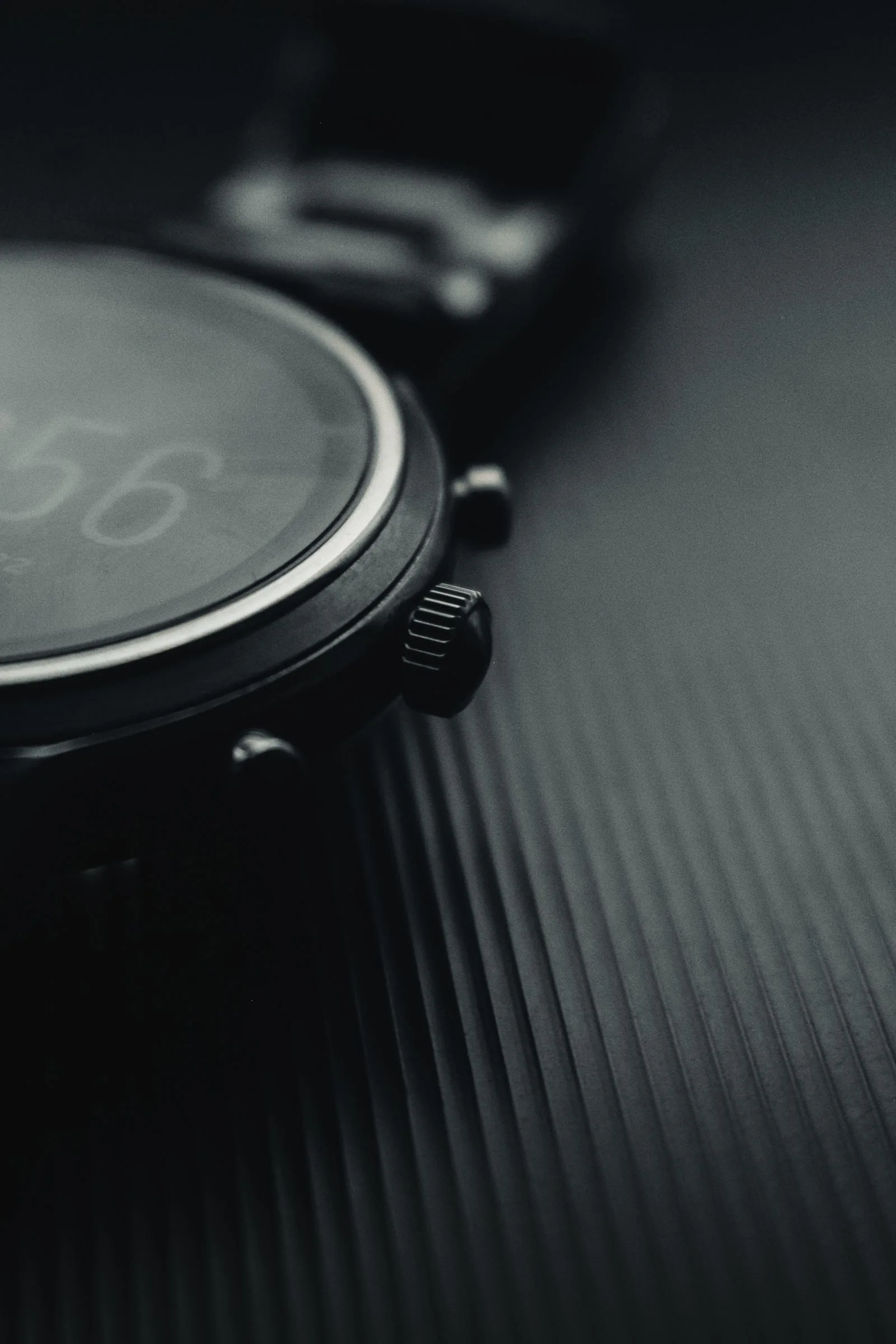
- Case diameter: the width of the case across the dial.
- Lug-to-lug: the distance from the tip of the top lugs to the tip of the bottom lugs. The lugs are the horns that hold the strap or bracelet. This is the length the watch takes up along your wrist.
- Thickness: the height of the case from caseback to crystal. Marathon notes that a thicker case sits higher off the wrist and can make a strap feel tighter than your measurement suggests.
- Lug width: the gap between the lugs, which sets the width of strap that fits.
If a seller leaves out lug-to-lug or thickness, ask for them. Other trade terms are in the watch terms glossary.
What watch size should I get?
We found no official standard that matches a wrist measurement to a case diameter, so treat any chart that claims to do so as opinion. The most useful check is practical: the lugs should sit on top of your wrist, not hang over the edges. Compare the lug-to-lug length with the flat top of your wrist.
To do that, hold a ruler across the top of your wrist, from one side to the other, where the watch sits. Note the width of the flat part. A watch whose lug-to-lug is longer than that flat area will overhang. Style, dial colour and bezel width also change how large a watch looks, which is why trying on a watch with similar dimensions tells you more than any number.
Longines, a watchmaker, publishes one version of a size-by-wrist chart on its own site: roughly 32 to 36 mm for a wrist under about 16 cm, 36 to 42 mm for a wrist between about 16 and 17.8 cm, and 42 to 46 mm above that, alongside a general rule that “a watch should occupy approximately two-thirds of your wrist width for optimal balance” (Longines, checked 30 October 2026). The same page suggests case thickness around 7 to 9 mm for a small wrist, 9 to 12 mm for a medium one and 12 to 15 mm for a large one, and a strap width of roughly 16 to 18 mm, 18 to 20 mm or 20 to 24 mm across the same three bands. Treat this, like any chart, as a starting point from one maker rather than a rule that applies to every watch or every wrist shape; the lug-to-lug check above is still the more direct test for whether a specific watch will overhang.
A worked example: two watches, one diameter
Two watches can share a case diameter and wear completely differently, because diameter alone ignores lug-to-lug and bezel width. Say Watch A has a 40 mm diameter, a 47 mm lug-to-lug and a narrow bezel, while Watch B also has a 40 mm diameter but a 50 mm lug-to-lug and a wide bezel surrounding a smaller dial opening. On a 165 mm flat wrist width, Watch A’s lugs sit comfortably within the flat area, while Watch B’s 50 mm lug-to-lug overhangs it by 3 mm on either side, even though both watches are described identically by diameter alone. These figures are illustrative only, to show the method, not real watches. It is why a listing that gives only the diameter is giving you half the picture, and why asking for lug-to-lug and bezel width matters as much for a watch you cannot try on as for one you can.
Has watch case size changed over time?
Yes, noticeably, and the shifts were driven more by fashion and technical need than by any change in human wrists. Research by Chrono24, based on roughly 50,000 listings pulled in November 2020 and January 2022, finds early wristwatches rarely went beyond 30 mm, with common diameters peaking around 35 mm in the mid-1940s, dropping to about 34 mm by the late 1950s, rising to around 36 mm through the 1980s and reaching about 40 mm by the late 20th century; sizes around 37 to 39 mm were largely absent across the same period (Chrono24 data, analysed by Goldammer, checked 30 October 2026). Chronographs and dive watches grew by around 5 mm between the mid-1960s and late 1970s before shrinking back by about 3 mm in the early 1980s, while dress watches moved the other way, settling at a slimmer 32 to 33 mm from the late 1960s onward.
The reasons given track what each category of watch needed to do. Early on, makers competed on building smaller, more refined movements, so a small case signalled technical skill. From the 1950s, tool watches needed bigger cases to carry water resistance, reinforced construction and extra complications. The 1970s added a period of deliberate case experimentation and “Space Age” styling, which the analysis treats as evidence that fashion, not mechanical necessity, can drive size on its own, while simpler dress watches moved less because they were less exposed to trend. The analysis’s own conclusion is blunt: “It’s not about necessity, rather about recognition and skill.”
The practical point for buying pre-owned: a 34 mm watch from the 1950s was not undersized for its era, and a 44 mm chronograph from the 2000s was not oversized for its era either. Judge a pre-owned watch’s size against watches of its own period and category, not only against what is common today, and use the lug-to-lug and wrist-width check above regardless of when the watch was made.
How should a watch bracelet or strap fit?
A metal bracelet should let you slide one finger between the bracelet and your wrist. Seiko recommends “enough space for one finger” (Seiko UK, checked October 2026), and Citizen’s bracelet instructions say the length should let you “comfortably slip one finger under the bracelet” (Citizen, 2023). Straps should buckle at or near the middle hole.
The table brings two published guides together. The bands come from Marathon; the strap lengths are as listed by Jewelers Mutual, which says its chart is based on averages and that lengths vary by brand and strap.
| Wrist circumference | Marathon’s size band | Strap lengths listed by Jewelers Mutual |
|---|---|---|
| 140–149 mm | Small (under 165 mm) | 100 mm / 60 mm |
| 150–159 mm | Small | 105 mm / 65 mm |
| 160–169 mm | Small to medium (medium from 165 mm) | 110 mm / 70 mm |
| 170–179 mm | Medium (165–190 mm) | 115 mm / 75 mm |
| 180–189 mm | Medium | 125 mm / 75 mm |
| 190–199 mm | Medium to large (large above 190 mm) | 130 mm / 80 mm |
| 200–209 mm | Large | 135 mm / 85 mm |
| 210–219 mm | Large | 145 mm / 85 mm |
Sources: Marathon, "How to Measure Your Wrist Size" (checked 29 October 2026); Jewelers Mutual, "How to measure your wrist size for a watch" (28 August 2024).
For a metal bracelet, Jewelers Mutual suggests adding about half an inch (roughly 13 mm) to your wrist measurement, because bracelets are worn slightly loose so they do not pinch. A bracelet that is too long or short can usually be changed by a link or two; see how to resize a watch bracelet.
How does strap material affect fit over time?
Fit is not fixed once you have the right length, because different materials behave differently on the wrist over weeks and years. A leather strap breaks in and can stretch slightly as it softens, so a strap that feels snug when new may need the buckle moved a hole after a few months of regular wear; it also absorbs sweat and water, which shortens its life and can leave it looser or cracked over time. A rubber or FKM strap does not stretch the way leather does and generally holds its length, but it has no spare holes beyond what was moulded in, so there is less room to fine-tune the fit than with a punched leather strap. A metal bracelet, once sized to the correct number of links, stays essentially fixed in length; the comfort then comes down entirely to the clasp mechanism, and some clasps include a small on-the-fly micro-adjustment of a few millimetres for a watch that is worn over a cuff in winter and bare-wristed in summer.
If you expect your wrist size to vary, whether from exercise, weather or simply the time of day, a strap with more adjustment built in, such as a NATO or a strap with multiple keeper loops and a long tail, gives you more room to move than either a bracelet sized to the millimetre or a rubber strap moulded to one length. Ask a seller which spare links or holes come with the watch, because a bracelet you cannot loosen is less forgiving of day-to-day wrist changes than a strap you can.
What if the lug width is an odd number, such as 19mm or 21mm?
It is more hassle, but manageable. WatchGecko, a strap retailer, says you can still find aftermarket straps and bracelets off the shelf for 19 mm and 21 mm lugs, and that demand for odd sizes has led more strap makers to stock them; a custom-made strap is also an option for an odd width, though not a custom bracelet. The retailer notes that 20 mm and 22 mm are “the norm” in recent sizing, with 20 mm the most widespread, and that widths of 18, 19 and 20 mm were typical through the 1960s and 1970s, which is part of why older watches can carry a size that looks unusual today (WatchGecko, odd sized lug widths for a watch strap, checked 30 October 2026). If a leather strap is not available at the exact odd width you need, the retailer suggests sizing up by a millimetre rather than down, since a strap can be made to sit slightly recessed between the lugs but should not be forced to stretch across a gap wider than it is cut for. Either way, confirm the lug width before you order a replacement; it will not always match what the case diameter alone might suggest.
How do you use a watch sizing guide when buying pre-owned?
Ask the seller for the case diameter, lug-to-lug and thickness, and the current bracelet length or the number of links fitted. Then ask whether the spare links are included. A previous owner may have had links removed, and if they were not kept, the bracelet may not stretch to fit you.
Spare links are one of the items to ask about in a full set. Jewelers Mutual notes that if you have no spare links, you will probably have to buy them from the brand, so ask before you pay rather than after. A dealer may size the bracelet for you before dispatch if you give them your measurement.
Buying online means you cannot try the watch on first. Check the seller’s returns policy, and read your rights when buying a watch online before you rely on a return. The step-by-step buying guide puts the fit check in order with the other questions to ask.
Frequently asked questions
How do I measure my wrist without a tape measure?
Wrap a strip of paper or a piece of string around your wrist where the watch sits, mark the overlap, and measure it against a ruler. Repeat once or twice to confirm the reading.
Should I measure my wrist on the bone or below it?
Measure where you wear the watch, which for most people is just below the wrist bone. Marathon notes that measuring on the bone can add a few millimetres.
Is case diameter the best guide to size?
No. Lug-to-lug length and thickness often matter more to how a watch wears, so ask for them as well.
What is lug-to-lug?
The distance from the tip of the top lugs to the tip of the bottom lugs. It shows how much of your wrist the watch covers from top to bottom.
How loose should a watch be?
You should be able to slide one finger under the bracelet or strap, which is what both Seiko and Citizen recommend.
Does a thick watch need a longer strap?
It can. A thicker case sits higher off the wrist, which can make the same strap feel tighter.
Can a bracelet be made longer?
Yes, if spare links are available. If the original links are missing, they usually have to be bought from the brand.
Are both my wrists the same size?
Not always. Measure the wrist you plan to wear the watch on.
My lug width is an odd size, such as 19mm or 21mm. Is that a problem?
Not a major one. WatchGecko, a strap retailer, says off-the-shelf aftermarket straps and bracelets exist for 19 mm and 21 mm lugs, and custom straps are an option too. If your exact width is not in stock, consider sizing up by a millimetre rather than down.
Were watches always around 40mm?
No. Research based on Chrono24 listings finds common diameters around 34mm in the late 1950s, rising to roughly 36mm through the 1980s and about 40mm by the late 20th century, with chronographs and dive watches swinging more over the decades. Judge a pre-owned watch’s size against its own era.
Does a leather strap stay the same size?
Not exactly. Leather can stretch slightly as it breaks in and absorbs moisture, so you may need to move the buckle a hole after some wear. Rubber straps hold their length better but have fewer adjustment holes.
Will a dealer size a watch before sending it?
Many will if you give them your wrist measurement, but ask first. Get any promise in writing.
This page is general information, not professional advice.
Sources (checked 29 October 2026)
- Seiko UK, How should I care for my watch band?
- Citizen, Simple Adjust bracelet instructions (PDF, file dated 2023)
- Marathon, How to Measure Your Wrist Size (undated)
- Jewelers Mutual, How to measure your wrist size for a watch (28 August 2024)
- Formex, How to Measure Your Wrist Size (31 May 2022)
- Longines, how to choose a watch according to your wrist size (checked 30 October 2026)
- Goldammer, history of watch size, analysis of Chrono24 listing data by Marcus Siems (checked 30 October 2026)
- WatchGecko, odd sized lug widths for a watch strap (checked 30 October 2026)
We check the facts in this guide against the sources named, and it is correct to the best of our knowledge as of October 2026. Rules, rates and sellers' terms change, so confirm the details with the seller, or with a professional, before you buy.