The questions to ask before buying a used watch fall into two groups: questions about the watch (its serial number, original parts, service history, polishing and papers) and questions about the dealer (who they are, the warranty, returns, payment and delivery). Ask all ten, in writing, before you pay. A good dealer answers each one plainly and puts the answers in the listing or invoice.
A pre-owned watch is one that has had at least one previous owner; “used” and “second-hand” mean the same. This guide is general information, not legal advice.
What questions should you ask before buying a used watch?
The table lists all ten, why each matters and what a good answer looks like. The sections after it explain each one. Where the law sets a minimum, the source column names it.
| # | Question | Why it matters | A good answer | Source |
|---|---|---|---|---|
| 1 | Who are you, and where are you based? | You need to know who you are contracting with | A trading name, a geographic address and contact details | Consumer Contracts Regulations 2013, Sch 2 |
| 2 | Can I see the serial and reference numbers before I pay? | You need them to check papers and registers | Clear photos of both, matching the papers | |
| 3 | Have you checked it against a stolen-property register? | A trader must have the right to sell the watch | Yes, with the result in writing | Consumer Rights Act 2015, s 17 |
| 4 | Which parts are original? | A watch must match its description | A written list of original and replaced parts | Consumer Rights Act 2015, s 11 |
| 5 | When was it last serviced, and by whom? | Seals and lubricants age | A dated invoice from a named workshop | Seiko UK |
| 6 | Has the case been polished? | Polishing removes metal | A straight yes or no, with photos of the edges | |
| 7 | What comes with the watch? | Papers help with servicing and resale | An itemised list | |
| 8 | What warranty do you give, and who honours it? | A guarantee is enforceable on its terms | Written terms, available on request | Consumer Rights Act 2015, s 30 |
| 9 | What happens if I want to return it? | You have legal rights the dealer cannot remove | A policy that states your statutory rights | Consumer Rights Act 2015, ss 19 and 22; Consumer Contracts Regulations 2013, reg 30 |
| 10 | How will I pay, and how will it be delivered? | Payment method affects protection; risk passes on delivery | Card payment accepted; insured, signed-for delivery | Which?, 2025; Consumer Rights Act 2015, s 29 |
Sources: Consumer Contracts (Information, Cancellation and Additional Charges) Regulations 2013, Schedule 2 and regulation 30; Consumer Rights Act 2015, sections 11, 17, 19, 22, 29 and 30; Seiko UK, Water Resistance; Which?, Section 75 (18 June 2025). Rows without a source are practical checks, not legal requirements. All checked 29 October 2026.
What does a good answer actually sound like?
Reading “ask for X” is one thing; recognising a good answer from a weak one in an actual exchange with a dealer is another. Here are four of the ten questions worked through with both sides of the conversation.
Serial number, before payment.
- Good: “Here are close photos of the serial and reference on the case, and a shot of them against the warranty card, before you pay anything.”
- Red flag: “I’ll send clear photos once the deposit’s in” or “the serial’s a bit worn, but trust me, it’s genuine.”
Service history.
- Good: “Last serviced March 2024 by [named independent workshop], invoice attached, pressure tested to 100m afterwards.”
- Red flag: “It’s been looked after” or “I believe it was serviced a few years back” with no invoice and no named workshop.
Polishing.
- Good: “Yes, the case was lightly polished when it was serviced in 2022; here are close photos of the lug edges so you can see the bevels.”
- Red flag: avoiding the question, or an answer that doesn’t match what the case edges look like in the photos you’ve already seen.
Returns.
- Good: “You have 14 days to cancel under the distance selling rules, and 30 days to reject if anything’s faulty, on top of that — here’s our policy in writing.”
- Red flag: “No returns on used watches” for an online sale, which simply isn’t lawful, or a policy that says nothing about your statutory rights at all.
The pattern across all four: a good answer is specific, documented and offered without you having to push for it. A weak answer is vague, verbal, or arrives only after payment.
1. Who are you, and where are you based?
Ask for the business’s trading name, its geographic address and how to contact it. For online and phone sales, the Consumer Contracts Regulations 2013 (Schedule 2) require a trader to give its identity, its geographic address and, where available, its telephone number and email before you are bound by the contract.
A good answer is a full address, not a PO box or a messaging handle. If the dealer is a company, you can look it up free on Companies House, which shows its registered address, when it was formed and its current and former officers (GOV.UK). Search the trading name the dealer gave you; if nothing matches, try the name on its invoice or the name behind its website instead, since the trading name on a listing and the registered company name are sometimes different. A company formed weeks ago, with a registered office at a residential address or a formation agent rather than a shop or warehouse, isn’t necessarily a problem on its own, but it’s worth weighing against everything else the dealer tells you. An answer that dodges the address is a reason to stop.
2. Can I see the serial and reference numbers before I pay?
Ask for clear photos of the serial number and the reference number on the watch itself. The reference identifies the model; the serial identifies that individual watch. You need both to check the papers, the service records and a stolen-property register.
A good dealer sends them without fuss. “After payment” is the wrong answer. What the numbers tell you, and where to find them, is in watch serial and reference numbers.
3. Have you checked it against a stolen-property register?
Ask whether the dealer has searched the serial number on a register such as CheckMEND, and for the result in writing. Under the Consumer Rights Act 2015 (section 17), a contract with a trader includes a term that the trader has the right to sell the goods, so a stolen watch is the dealer’s problem in law.
The law helps, but losing the watch to its true owner is still disruptive. A good answer is “yes, here is the report”, plus how the dealer bought the watch. Run your own search as well; the registers are listed in our stolen watch check guide.
4. Which parts are original?
Ask which parts left the factory with the watch and which have been replaced: dial, hands, crown, crystal, bezel and bracelet. The Consumer Rights Act 2015 (section 11) says goods from a trader must match their description, so a written answer becomes part of what you are buying.
Replacement parts fitted by the maker during a service are common and not a fault. Parts from another source are a different matter, because some brands refuse to service them: Omega, for example, says a watch is eligible for service only if it is built entirely with matching Omega parts. A good answer names each replaced part and who supplied it.
5. When was it last serviced, and by whom?
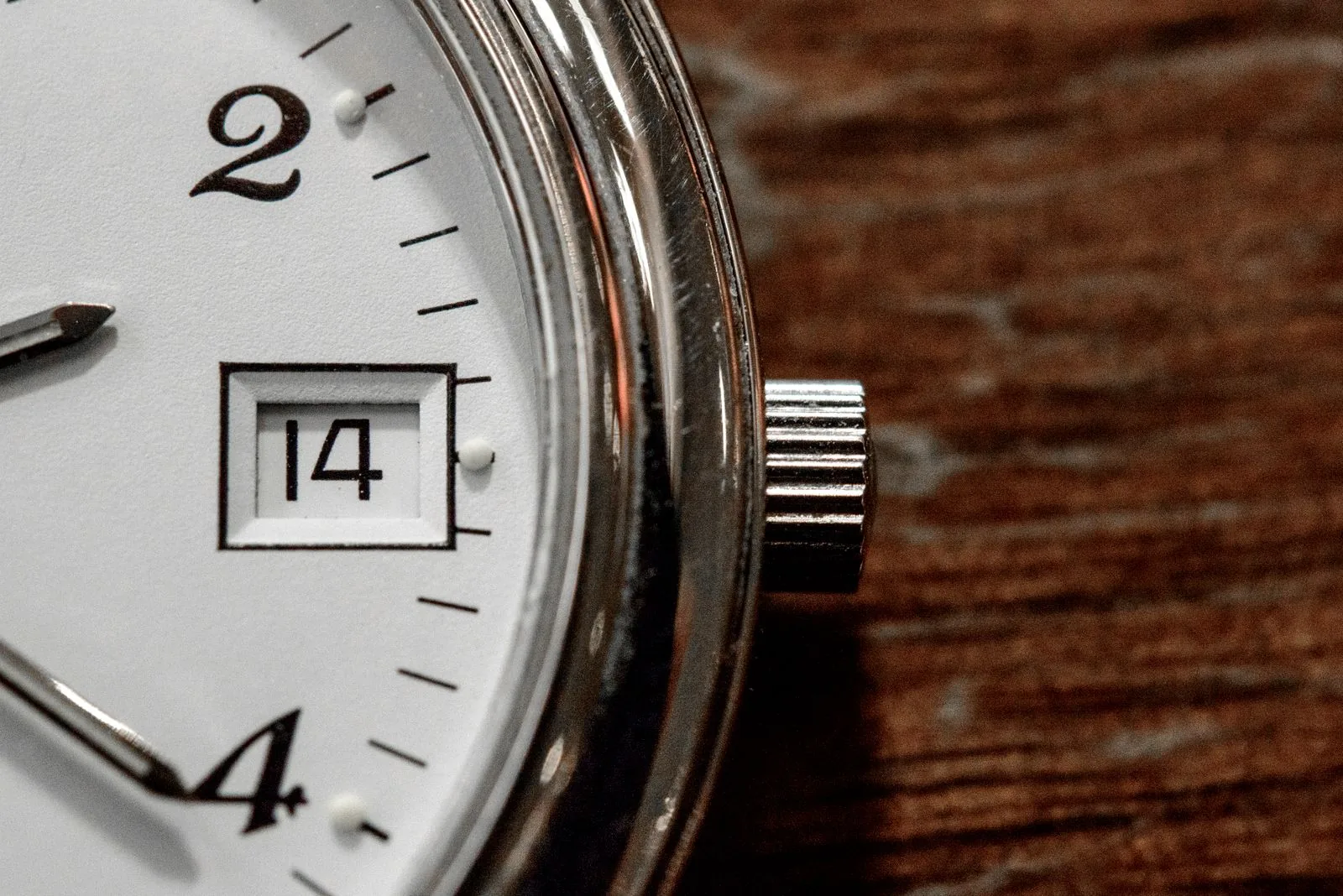
Ask for the date of the last service, the workshop that did it, and the invoice. A service record tells you the movement has been cleaned, lubricated and adjusted, and often that the seals have been replaced. Seiko says water resistance is affected by the ageing of gaskets and is not permanently guaranteed.
A good answer is a dated invoice from a named brand service centre or independent watchmaker, with a list of the work done. Ask whether the watch was pressure tested afterwards. How to read a service record is covered in how to check if a watch has been serviced.

6. Has the case been polished?
Ask directly, and ask for close photos of the case edges and lugs. Polishing removes scratches by removing metal, which softens sharp edges and bevels over time. Some buyers want an unpolished case; others prefer a refreshed one. Either way, you should know.
A good answer is a straight yes or no, and if yes, when and by whom. Compare the photos against the signs in how to tell if a watch has been polished. The dealer’s condition grade will not tell you; there is no standard scale, as our condition grades guide explains.
7. What comes with the watch?
Ask for an itemised list: inner and outer box, warranty card or papers, booklets, spare links, tags and any service paperwork. “Full set” means different things to different sellers, so the list protects you. Check that any papers carry the same serial number as the watch.
A good answer is a list that matches the photos and is repeated on the invoice. Missing items are common on older watches and need not stop a sale, but they should be stated. More on this in what “full set” means.
8. What warranty do you give, and who honours it?
Ask for the length of the warranty, what it covers and excludes, and who repairs the watch under it: the dealer, a third party or the brand. Under the Consumer Rights Act 2015 (section 30), a guarantee is binding on its terms, and the guarantor must make it available in writing within a reasonable time if you ask.
A good answer is written terms, sent before you pay, that name the guarantor and say how to claim. The guarantee must also say that it does not affect your statutory rights. How manufacturer and dealer cover differ is in watch warranty explained.
9. What happens if I want to return it?
Ask for the returns policy in writing, and check it sits alongside your legal rights rather than replacing them. Buying online, you normally have 14 days to cancel after the watch arrives (Consumer Contracts Regulations 2013, regulation 30). For a faulty watch, the Consumer Rights Act 2015 gives a 30-day short-term right to reject (section 22).
The Act also presumes that a fault appearing in the first six months was there on delivery, unless the dealer proves otherwise (section 19). A good answer explains how to return the watch, who pays postage and how fast the refund is made. A policy that says “no returns” on an online sale is not a good answer.
10. How will I pay, and how will it be delivered?
Ask which payment methods the dealer accepts and how the watch will be sent. Paying by credit card can give you a claim against the card provider under Section 75 of the Consumer Credit Act for items costing over £100 and up to £30,000; it does not apply to debit cards, though chargeback may (Which?, 2025).
For delivery, a good answer is insured, tracked and signed for. Under the Consumer Rights Act 2015 (section 29), the watch stays at the dealer’s risk until it comes into your physical possession or that of someone you named to receive it. Be wary of a dealer who will take only bank transfer.
How carriers cover watches in transit is set out in how watches are shipped and insured.
What if the dealer is based outside the UK? Ask the same ten questions, but weigh two extra points. First, UK consumer law protects you against a trader targeting UK consumers, but enforcing that right against a business with no UK presence is harder in practice than against one with a UK address you can write to or, if it comes to it, sue. Second, check whether the price already includes import VAT and any customs duty, or whether that’s added on top once the parcel reaches the UK: a headline price that looks competitive can end up higher once those are added, and a parcel can sit with customs for around three weeks while it’s assessed. A dealer who answers this clearly, rather than leaving you to find out at the border, has told you something useful about how they do business.
Frequently asked questions
What is the most important question to ask a watch dealer?
Ask for the serial number before you pay. It lets you check the papers, the service history and a stolen-property register, and a dealer who refuses it has told you something about the sale.
Should I get the dealer’s answers in writing?
Yes. An email or a line on the invoice is enough. Under the Consumer Rights Act 2015, a trader’s goods must match their description, so written answers give you something to rely on if the watch is not as described.
Does a dealer have to tell me its address?
For online and phone sales, yes. Schedule 2 of the Consumer Contracts Regulations 2013 requires a trader to give its identity and geographic address before the contract is made.
Can a dealer refuse returns on a used watch?
Not if the watch is faulty: the Consumer Rights Act 2015 gives a 30-day short-term right to reject. For an online purchase, you also normally have 14 days to cancel under the Consumer Contracts Regulations 2013.
Is a dealer warranty legally binding?
Yes. Section 30 of the Consumer Rights Act 2015 makes a guarantee a binding contractual obligation on its terms, and the guarantor must provide it in writing on request.
What if the dealer says the watch has been serviced but has no invoice?
Treat the claim as unproven. Ask who did the work and when, and whether the workshop can confirm it. Without a record, plan for a service soon after you buy.
Is it safer to pay a dealer by credit card?
It can give extra protection. Which? says Section 75 covers credit card purchases over £100 and up to £30,000. It does not cover debit cards, where chargeback may be an option.
Who is responsible if the watch is lost in the post?
The dealer, if you are a consumer buying from a trader. Section 29 of the Consumer Rights Act 2015 says goods stay at the trader’s risk until they reach you or someone you named.
Do these questions apply to private sellers too?
Most of them do, but your legal rights are narrower. Which? says buyer beware applies with a private seller: the watch must be as described, and the seller need not disclose faults.
This page is general information, not legal advice.
Sources (checked 29 October 2026)
- Consumer Contracts (Information, Cancellation and Additional Charges) Regulations 2013, Schedule 2 and regulation 30
- GOV.UK, get information about a company
- Consumer Rights Act 2015, section 11, section 17, section 19, section 22, section 29 and section 30
- OMEGA, customer service FAQ: which watches are eligible for service?
- Seiko UK, Water Resistance
- Which?, Section 75 of the Consumer Credit Act (18 June 2025)
- Which?, rights when buying second-hand goods (5 March 2026)
We check the facts in this guide against the sources named, and it is correct to the best of our knowledge as of October 2026. Rules, rates and sellers' terms change, so confirm the details with the seller, or with a professional, before you buy.