Buying a vintage watch means judging three things the listing photos rarely show: whether the parts are original, how the watch has been serviced, and what condition its seals and movement are in. This buying a vintage watch guide covers each of those, then explains how your legal rights change between a dealer, a private seller and an auction. Read it before you pay.
A vintage watch, in the way the trade uses the phrase, is an older watch bought for its age and period character rather than as a current model. There is no legal definition. This guide is general information, not legal or financial advice.
What counts as a vintage watch?
No law or industry body fixes an age. Dealers and auction houses use “vintage” loosely, so always ask for the production year. The nearest official cut-offs are narrow ones: HMRC treats antiques as objects more than 100 years old for its VAT margin schemes, and Omega’s restoration service guarantees work faithful to the original model for watches made before 1940.
Those are definitions for tax and for one brand’s workshop, not for a sales listing. What matters to you is the actual date, supported by evidence. Some brands will search their records for you. Omega sells an Extract of the Archives, and its conditions of sale say the extract is not proof that the watch is authentic, and that Omega may refuse an order for a watch less than ten years old. Reference and serial numbers are the starting point; see reading serial and reference numbers.
How do brand archive extracts compare?
Omega is not the only brand that will search its own records, and the services are not identical. Patek Philippe’s Extract from the Archives costs 500 Swiss francs, fully refundable if the watch turns out ineligible, and is only issued for a watch whose first sale was more than ten years before the request; Patek allows one extract per watch in any 12-month period, cannot process a request while the watch is in for service, and says only its Extracts Service can decide whether to issue one, with no appeal (Patek Philippe, Frequently asked questions: Extract from the Archives, checked 29 October 2026). Longines runs a similar service under the name “History of my watch”: the fee is CHF 120, the watch must again be more than ten years old, and Longines says delivery takes four to five weeks plus shipping time, with the right to cancel the order not applying once it is placed (Longines, History of my watch, checked 29 October 2026). Longines is explicit that the extract does not certify authenticity and does not include a value estimate.
| Brand | Service name | Fee | Minimum age | Typical wait | Proves authenticity? |
|---|---|---|---|---|---|
| Omega | Extract of the Archives | Not published on the brand’s conditions-of-sale page | Normally over 10 years | Not published | No, by Omega’s own wording |
| Patek Philippe | Extract from the Archives | CHF 500, refunded if ineligible | First sold more than 10 years ago | Not published | Not stated as proof |
| Longines | History of my watch | CHF 120 | Over 10 years | 4-5 weeks plus shipping | No, stated explicitly |
Sources: Patek Philippe, Extract from the Archives FAQ; Longines, History of my watch; OMEGA, conditions of sale. All checked 29 October 2026.
None of these extracts is a substitute for a watchmaker’s own inspection, and all three brands say so in one form or another. What an extract is good for is cross-checking the production date and, where the brand’s records go that far, the original configuration of the watch, against what the seller is telling you. A seller who refuses to let you order one, or who already has one that does not match the watch in front of you, is worth walking away from.
Why does originality matter so much on a vintage watch?
On an old watch, the dial, hands, crown, crystal and bracelet may each have been replaced at some point. A part fitted by a service centre is called a service part: a genuine replacement supplied by the brand, which may differ in detail from what the watch left the factory with. Originality is about which of these parts are period-correct and which are later.
Replaced parts are normal after decades of use. The problem comes when a listing does not say so. Ask the seller which parts are original, which are service parts and which are not from the maker at all, and get the answer in writing. Under the Consumer Rights Act 2015, goods bought from a trader must match their description (section 11), so a written description gives you something to rely on.
Non-maker parts can also affect servicing. Omega says a watch is eligible for service only if the movement and watch head are built entirely with matching Omega parts. It refuses a non-Omega movement, and if it finds counterfeit components it may offer to replace them with genuine parts for a fee or decline the service.
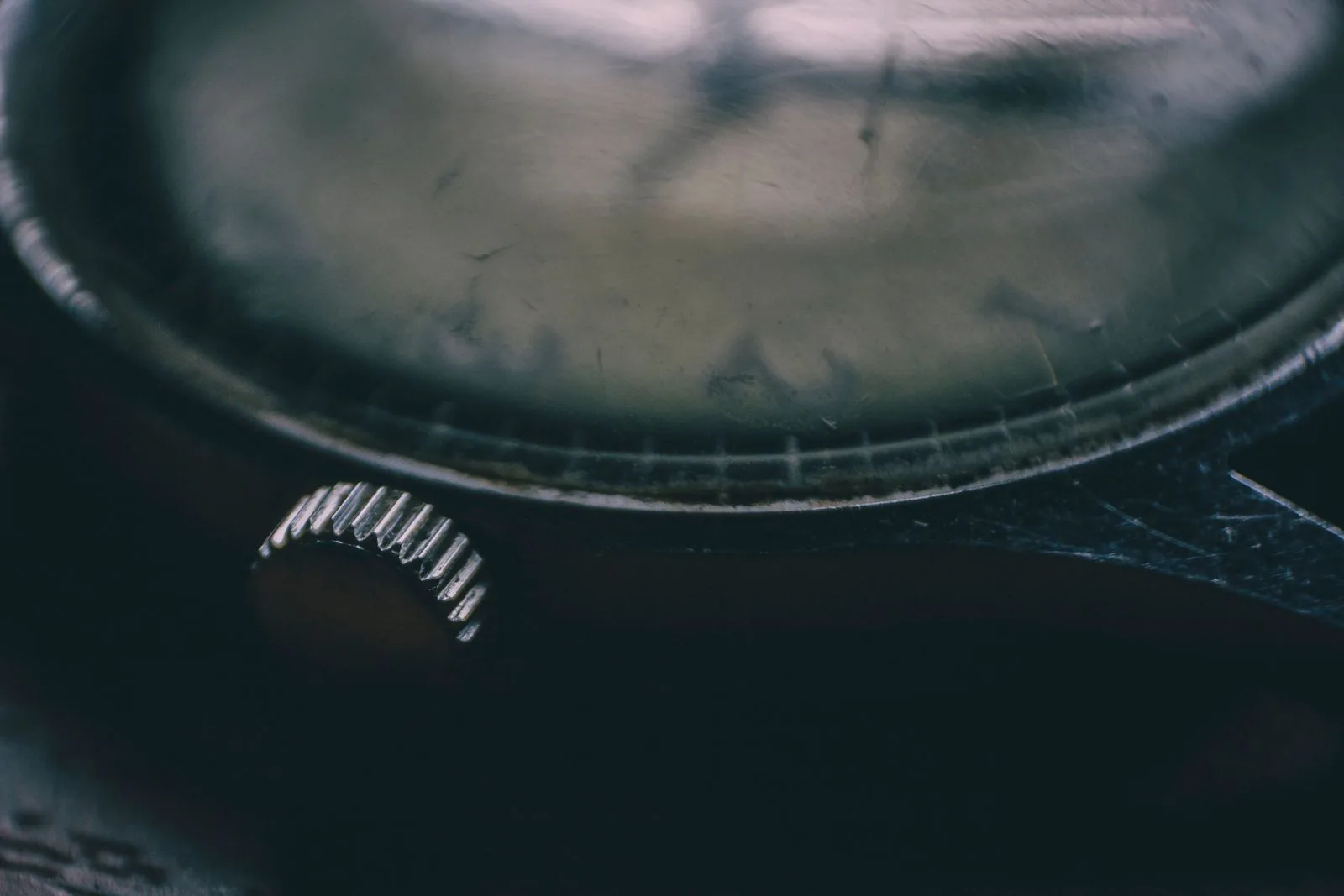
The case matters too. Heavy polishing softens edges and removes metal, and it cannot be put back. Learn the signs in how to tell if a watch has been polished, and note that a seller’s grade describes the outside only; condition grades explained shows how loosely those words are used.
Do the case and movement serial numbers have to match?
Not always, but a mismatch is a question to get answered before you buy, not after. The auction house Catawiki describes a related category it calls a “marriage watch”: one where an older movement has effectively been combined with a case or parts it was not originally sold with, ranging from a vintage pocket-watch movement given new wristwatch lugs to an original movement paired with a modern-looking case. Catawiki says it only sells marriage watches where the movement itself is original, and notes that some collectors reject the whole category as “edited and even damaged” (Catawiki, “What time is it? Time to buy a marriage watch”, checked 29 October 2026). That is a more deliberate conversion than most vintage buyers will meet, but the underlying question is the one a collector asks of any older watch: do the serial numbers on the case, the movement and, where it carries one, the dial or bracelet, actually belong together?
In practice you check this the way you check any other originality claim. Ask the seller for close, well-lit photographs of the case back or case-edge serial, the movement serial under the balance or on a bridge, and any reference numbers printed on the dial or stamped into the bracelet end-links, then compare them against what that reference should carry for its production period. A brand’s archive extract, from the table above, confirms what the brand’s own records say about one specific case or movement number; it does not, on its own, confirm that the two numbers in front of you were sold together, since a brand can usually only trace a single number at a time, not match a pair. Where a seller cannot or will not provide clear photographs of every serial, or where a specialist forum for that brand flags the reference as one that is commonly mismatched, treat it as a point to negotiate on or to have independently checked before you commit.
What service history should a vintage watch have?
Ideally, dated invoices that say who did the work and what was replaced. A note saying “serviced” with no date or workshop tells you little. Ask when the last service was, whether it was done by the brand or an independent watchmaker, and whether replaced parts were kept.
Brand services can change a watch’s appearance. Omega’s complete service includes restoring the shine of the case and metal bracelet, and replacing all gaskets that keep the watch water resistant. If you would rather keep an unpolished case, raise it before the watch is sent. For what a service record should look like, see how to check if a watch has been serviced.
Can you still get parts for a vintage watch?
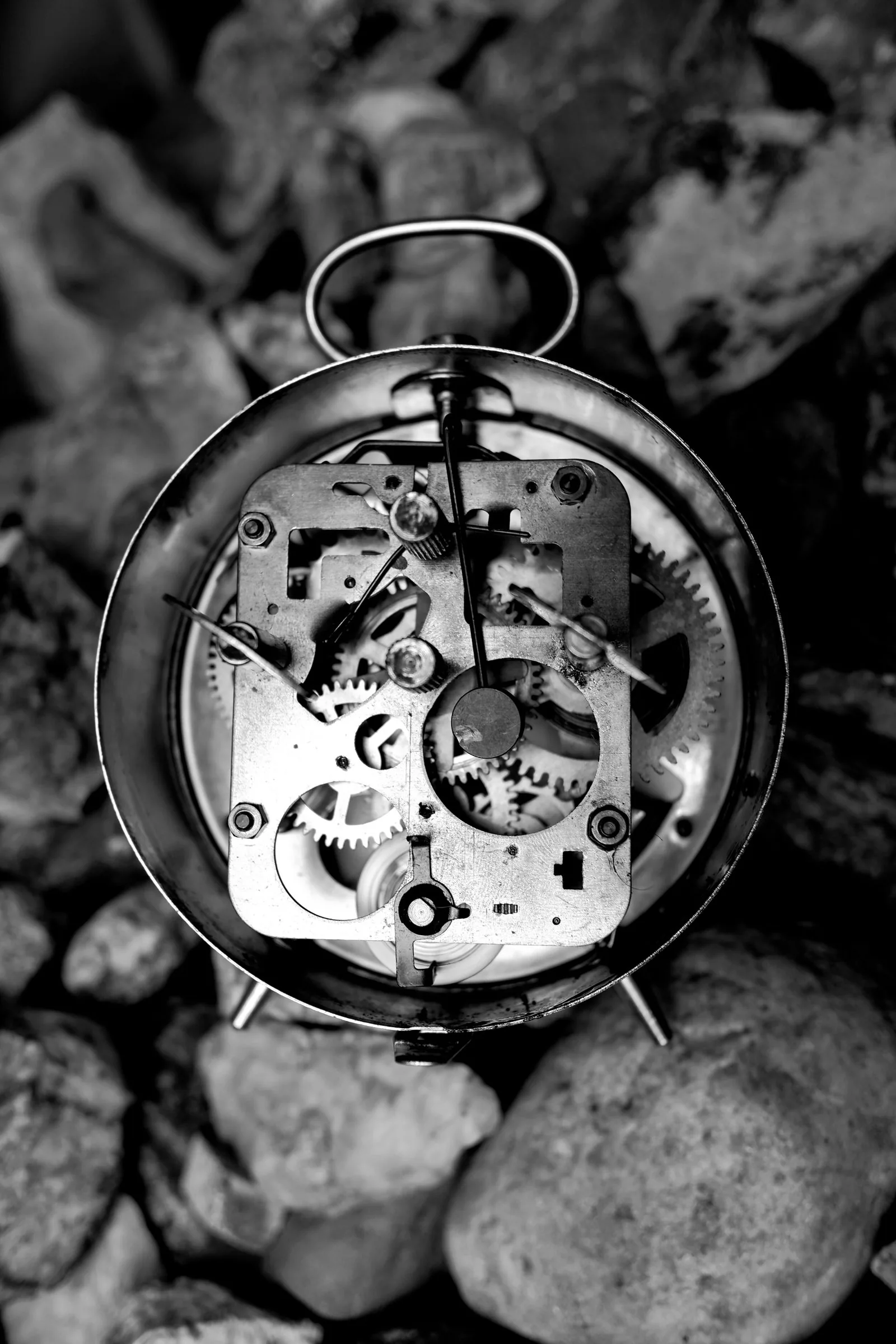
Sometimes, and it varies by brand and age. Omega says it holds a large stock of components for restoring old watches, refabricates missing parts by hand in some cases, and that restoration work takes at least three months and carries a 24-month warranty. Smaller or defunct makers may have no parts at all.
Before you buy, ask a watchmaker whether the movement is one they can service and source parts for. A rare movement with no spares can turn a routine repair into a long wait.
Is a vintage watch water resistant?
Assume not, whatever the case or dial says. Seiko says a watch’s water resistance is not permanently guaranteed and is affected by the ageing of gaskets and by parts deformed in a knock. On a watch that is decades old, the original rating says little about today.
If the watch has been serviced and pressure tested recently, ask for the date and result. Otherwise keep it away from water. The ratings themselves are explained in watch water resistance explained.
Are there safety issues with old luminous dials?
Some older watches used radium-based luminous paint. A 2012 study in Environment International by Gillmore and colleagues measured 15 pocket watches and 18 wristwatches and found radon building up in a small test room. The authors said the risk is greater for collectors and can be reduced with knowledge and precautions.
Do not open the case or try to clean or relume an old dial yourself. If you are unsure what the luminous material is, ask the seller and a watchmaker before you buy.
Where should you buy a vintage watch?
From a seller who gives a written description and a clear returns route. Your legal rights depend on who the seller is and how the sale happens. The table below compares the main routes, from the legislation and consumer guidance cited.
| Where you buy | Your main rights | Source |
|---|---|---|
| Dealer (a trader), online or by phone | Goods must be of satisfactory quality and as described; 30-day short-term right to reject faulty goods; 14 days to cancel a distance contract | Consumer Rights Act 2015, ss 9, 11 and 22; Consumer Contracts Regulations 2013, reg 30 |
| Dealer, in person in a shop | As above, without the 14-day cancellation right, which applies to distance and off-premises contracts | Consumer Rights Act 2015, ss 9, 11 and 22 |
| Private seller | Goods must be as described; “buyer beware” applies and the seller need not disclose faults | Which?, 2026 |
| Public auction you could attend in person | For second-hand goods, you are not a consumer for most of the goods rights in Chapter 2; no right to cancel | Consumer Rights Act 2015, s 2(5); Consumer Contracts Regulations 2013, reg 28(1)(g) |
Sources: Consumer Rights Act 2015, section 2, section 9, section 11, section 22; Consumer Contracts (Information, Cancellation and Additional Charges) Regulations 2013, regulation 28 and regulation 30; Which?, rights when buying second-hand goods (5 March 2026). All checked 29 October 2026.
Satisfactory quality takes account of the description and the price (section 9), so an honest description of a 60-year-old watch is judged as a 60-year-old watch. The trade-offs between sellers are set out in private seller versus dealer.
Do you pay VAT differently on a genuine antique watch?
Sometimes, if you are importing it rather than buying from UK stock. HMRC’s guidance on valuing goods for import VAT says certain works of art, antiques and collectors’ items get a reduced valuation at importation: you calculate the normal value for duty, add any additional costs, then take only 25% of that total as the amount VAT is actually charged on. Because the standard rate is 20%, taxing a quarter of the value works out as an effective rate of 5% on the full price. HMRC’s antiques category under this rule covers products, other than works of art or collectors’ items, that are 100 years old or more; items of historical significance that are not yet 100 years old can sometimes qualify too, but mass-produced items usually do not, and HMRC advises checking with its Tariff Classification Service before you commit to a purchase (GOV.UK, “How to value goods for import VAT”, checked 29 October 2026).
This only helps if the watch is actually over a century old and you can show it, which is where an archive extract or a specialist’s written opinion earns its keep again. A watch marketed loosely as “vintage” but made in, say, the 1970s does not qualify; it is charged import VAT in the ordinary way, currently due once the parcel’s declared value exceeds £135. For a watch bought from a seller outside the UK, ask for the production date in writing before you buy, not after the parcel is held at customs.
What should you check before buying a vintage watch at auction?
Read the condition report, the conditions of sale and the buyer’s premium before you bid. Ask the auction house specific questions about original parts and servicing, and get the answers in writing. Bids are binding, and at a public auction you could attend, the usual 30-day right to reject does not apply to second-hand goods.
A worked, illustrative example shows why the premium matters as much as the hammer price. Say a 1960s steel chronograph has a hammer price of £8,000 and the house charges a buyer’s premium of 25% on the first portion of the price, tapering on higher bands, as several UK and international houses structure theirs; at a flat 25% that premium alone adds £2,000, bringing the cost before VAT and shipping to £10,000, roughly a quarter more than the hammer price suggested. Premium rates, bands and whether VAT is charged on top of the premium vary by house and by lot, so treat this figure as illustrative only and read the specific conditions of sale for the lot you are bidding on; our watch auctions guide explains how to find and read them before you bid.
The fees, the reports and how to bid are covered in our watch auctions guide. Run a stolen-watch check on the serial number where the lot details allow it.
Frequently asked questions
How old does a watch have to be to be vintage?
There is no fixed age. Sellers use the word loosely, so ask for the production year and the evidence for it. HMRC’s VAT margin scheme guidance treats antiques as more than 100 years old, which is a tax definition, not a sales one.
Is a vintage watch with service parts a bad buy?
Not necessarily. Many old watches have had parts replaced during servicing. What matters is that the seller tells you which parts are original and which are not, in writing, before you buy.
Can I swim with a vintage watch?
It is safer not to. Seiko says water resistance is not permanently guaranteed and is affected by ageing gaskets. Unless a recent pressure test result is available, keep an old watch dry.
Will the brand service a vintage watch?
Some will, on their own terms. Omega says it services watches built entirely with matching Omega parts and restores watches made before 1940 in Biel, Switzerland. Ask the brand before you buy if a factory service matters to you.
Does a brand archive extract prove a vintage watch is genuine?
No. Omega’s conditions of sale say an Extract of the Archives does not constitute proof of authenticity. It is a record from the brand’s files, useful alongside a watchmaker’s inspection. Patek Philippe and Longines run similar paid services with their own fees and minimum ages, and neither claims to prove authenticity either.
What does it mean if a vintage watch is described as “married”?
In the strict sense auction houses use, a marriage watch combines an older movement with a case or parts it was not originally sold with, such as a pocket-watch movement rehoused for the wrist. More loosely, buyers also use it for a watch whose case and movement serial numbers do not appear to belong together. Either way, ask for clear photographs of every serial number before you buy.
Do I pay less VAT importing a genuine antique watch?
Possibly. HMRC’s rules on valuing imports for VAT give a reduced valuation to antiques, defined there as items 100 years old or more, which works out as an effective rate of about 5% rather than the standard 20%. A watch that is merely old, rather than genuinely over a century old, does not qualify and is taxed in the ordinary way.
Do I have consumer rights when buying a vintage watch from a dealer?
Yes. A dealer is a trader, so the Consumer Rights Act 2015 applies: the watch must be of satisfactory quality and as described, and you have 30 days to reject a faulty watch.
What rights do I have buying a vintage watch at auction?
Fewer. For second-hand goods at a public auction that individuals can attend in person, section 2(5) of the Consumer Rights Act 2015 says you are not a consumer for most of its goods rights. Rely on the auction house’s conditions of sale.
Are radium dials dangerous?
A 2012 study by Gillmore and colleagues found radon building up around old radium-dial watches in a small room and described a health risk, especially for collectors. Do not open or relume one yourself.
Should I have a vintage watch inspected before buying?
Yes, where the seller allows it. An independent watchmaker can check the movement and parts and spot replacements, and confirm the serial and reference numbers match the papers.
This page is general information, not financial or legal advice.
Sources (checked 29 October 2026)
- HMRC, VATMARG02100: what goods are eligible for the margin schemes? (definition of antiques)
- OMEGA, watch restoration and complete service: the main steps
- OMEGA, customer service FAQ: which watches are eligible for service?
- OMEGA, conditions of sale (Extract of the Archives, sections 2.6 and 6)
- Seiko UK, Water Resistance
- Gillmore, G. K. et al., Radium dial watches, a potentially hazardous legacy?, Environment International 45 (2012)
- Consumer Rights Act 2015, section 2, section 9, section 11 and section 22
- Consumer Contracts (Information, Cancellation and Additional Charges) Regulations 2013, regulation 28 and regulation 30
- Which?, rights when buying second-hand goods (5 March 2026)
- Patek Philippe, Extract from the Archives FAQ
- Longines, History of my watch
- Catawiki, “What time is it? Time to buy a marriage watch”
- GOV.UK, How to value goods for import VAT (antiques and reduced valuation)
We check the facts in this guide against the sources named, and it is correct to the best of our knowledge as of October 2026. Rules, rates and sellers' terms change, so confirm the details with the seller, or with a professional, before you buy.