To tell if a Cartier watch is real, check the seller first, then match the serial number engraved on the case to the Cartier warranty card and receipt, look closely at the details you can see, and have a watchmaker inspect the watch. Get a written refund promise in case it fails. Copies now pass casual inspection, so no visual check settles it alone.
A Cartier warranty card is the document Cartier or an authorised retailer activates when a new watch is sold; Cartier says it must be presented for warranty claims. This page applies the method in our general guide on how to spot a fake watch to Cartier. It is a buyer’s checklist, not a technical authentication method.
How do you tell if a Cartier watch is real?
Combine checks that each catch a different problem: the seller’s identity and terms, the serial number against the papers, the visible details, a stolen-watch search, and an independent inspection. A seller who will not show the serial number, or will not put a refund promise in writing, has answered the question for you.
Copies have become harder to spot. Watchfinder & Co., a pre-owned specialist owned by Cartier’s parent group Richemont, reported in 2023 that about five years earlier roughly 80% of fakes could be spotted at a glance, and that by 2023 about 80% needed closer scrutiny (Watchfinder & Co., reported by FashionUnited, August 2023).
Ask the seller for:
- New daylight photos of the actual watch: dial, caseback, crown, clasp and the serial number.
- The warranty card, receipt and any Cartier service paperwork, with numbers visible.
- The seller’s name and address, or the dealer’s company details.
- A written promise of a full refund if a watchmaker you choose finds it is not genuine Cartier.

What paperwork should a genuine Cartier have?
A Cartier sold new should come with a Cartier International Warranty, which Cartier says must have been activated at the time of purchase by a Cartier boutique or authorised retailer, and which must be shown for a warranty claim (Cartier). The warranty card carries a QR code the owner can scan to register for Cartier Care (Pragnell).
The serial number engraved on the case should match the card and the receipt. Cartier’s warranty does not cover a watch whose serial number originally engraved on the case has been removed or is not clearly legible (Cartier). A scratched-out or unreadable serial is therefore a reason to walk away, whatever the explanation.
Papers can be copied along with watches, so a card is something to check, not proof. Our guide to what “full set” means explains what each item proves, and how serial and reference numbers work explains what the numbers identify.
Which details on a Cartier watch can you check yourself?
You can check the serial number and its match with the papers, the movement type against the model’s published specification, details Cartier is known to place on some dials, and whether the condition fits the seller’s story. These checks catch poor copies and mismatched watches. Good copies can pass them, so treat them as a first filter.
| What to check | What a buyer is looking for | Limit of the check | Source |
|---|---|---|---|
| Serial number | Engraved on the case, clearly legible, matching the warranty card and receipt | Numbers can be copied from genuine watches | Cartier |
| Warranty card | Activated by a Cartier boutique or authorised retailer; QR code for Cartier Care | Cards can be forged | Cartier; Pragnell |
| Hidden dial signature | On some Cartier dials, CARTIER is written into a Roman numeral, usually the X or VII | Copies reproduce it; not every model has one | Monochrome, 2026 |
| Movement type | Quartz or mechanical, as listed for that model and reference | A copy may use either type | Buyer practice: compare with the reference |
| Service history | Servicing by Cartier or a Cartier-authorised entity | Service records can be faked | Pragnell |
Sources: Cartier, International Warranty; Pragnell, Cartier Care; Monochrome Watches, Fighting counterfeiting (Erik Slaven, 28 February 2026). Checked 29 October 2026. This is a buyer's checklist, not Cartier's authentication procedure.
A detail that should be there and is missing is a strong warning; a detail that is present proves little, because counterfeiters copy what buyers look for. Compare the watch with the model as Cartier presents it, and ask the seller for the reference number so you are comparing like with like.

Condition matters too. A case with soft, rounded edges has probably been polished, which is common on genuine watches but should match the description. See how to spot polish on a watch case.
Which model-specific details can you check on a Tank, Santos or Ballon Bleu?
Beyond the general checks above, a few details differ by model and are worth knowing before you compare a specific watch. SwissWatchExpo’s authentication guide describes Cartier’s use of flathead case screws rather than the criss-cross Phillips-head screws seen on many copies, and notes that their position differs by model: on the Santos, the screws sit on the front of the case, visibly holding the bezel over the dial, which is one of the design’s signature features; on the Tank, by contrast, the screws are on the case back, over the movement, and the front is plain (SwissWatchExpo, 2023). A Santos without visible front screws, or a Tank with screws on the front rather than the back, is a mismatch worth asking about.
Many Cartier models, including pieces from the Tank, Pasha and Santos lines, carry a deep blue sapphire cabochon set into the winding crown. SwissWatchExpo’s guide says a genuine cabochon is “set into place” into the crown rather than simply stuck on, so a stone that looks glued on or sits loosely is a sign to query (SwissWatchExpo, 2023). The same guide notes that Cartier’s hands are typically blued steel and screwed rather than glued onto their stems; hands that appear glued, loose or painted a flat blue rather than showing the depth of heat-blued steel are worth a closer look.
These are buyer’s clues drawn from a specialist pre-owned dealer’s guide, not Cartier’s own published authentication criteria, and Cartier’s design details can change between references and over the decades a model has been in production, so compare against the specific reference number, not the model name alone.
Does Cartier make its own movements, and does that affect authentication?
Cartier has built increasingly more of its own movements since the mid-1990s, branding them as calibres from the “Cartier Manufacture.” Cartier’s own account of its movement history says the 430 MC, developed in 1996, was the brand’s first movement “designed and developed by the Maison’s watchmakers,” and that the Cartier Manufacture has continued producing its own calibres since, including a new automatic skeleton calibre (the 9629 MC) introduced in 2023, and the 9801 MC, which it says took eight years to develop (Cartier, “Movements”, checked 30 October 2026). A Cartier watch using one of these manufacture calibres should match the movement reference Cartier publishes for that model; a watch described as carrying an in-house Cartier calibre but actually running a generic supplied movement is a mismatch a watchmaker can identify by opening the case.
This does not mean every genuine Cartier uses an in-house movement. Many Cartier watches, particularly in lower-priced or older lines, use movements bought in and finished by Cartier rather than designed from scratch; our guide to in-house versus outsourced movements explains why that distinction affects servicing more than it affects authenticity. Either way, ask the seller which calibre is fitted and check it against Cartier’s published specification for that reference.
What does Cartier itself offer buyers?
Cartier’s own routes are its warranty, the Cartier Care registration service, servicing through Cartier boutiques and authorised centres, and a loss-and-theft reporting partner. Its international warranty covers manufacturing defects for 24 months from purchase, and Cartier Care can extend it by up to six years, to a maximum of eight years in total (Cartier).
The extension must be requested while the initial two-year warranty is still valid, and Cartier says it can be used by any subsequent buyer or owner of the watch (Cartier). Registration works by scanning the QR code on the warranty card or entering the serial number on Cartier’s website (Pragnell). Cartier does not describe registration as an authenticity check, so do not treat a successful registration as one.
Cartier Care’s complimentary services exclude watches serviced by non-Cartier-authorised entities or fitted with non-genuine parts (Pragnell). Watch warranties explained covers how maker and dealer cover differ.
Is there a certified pre-owned route for Cartier?
Yes. Watchfinder & Co. sells Cartier watches under a Cartier International Official Pre-Owned Warranty, which it describes as 24 months as standard, covering manufacturing and mechanical defects only (Watchfinder & Co.). Richemont’s 2026 annual report describes this as a manufacturer-certified pre-owned partnership with Cartier (Richemont, 2026).
Watchfinder says Cartier watches sold through its Marketplace by certified third-party sellers are excluded from the Cartier warranty and come with a Watchfinder warranty instead (Watchfinder & Co.). Check which applies before you buy. The Cartier brand page compares the main UK buying routes.
When should a watchmaker inspect a Cartier?
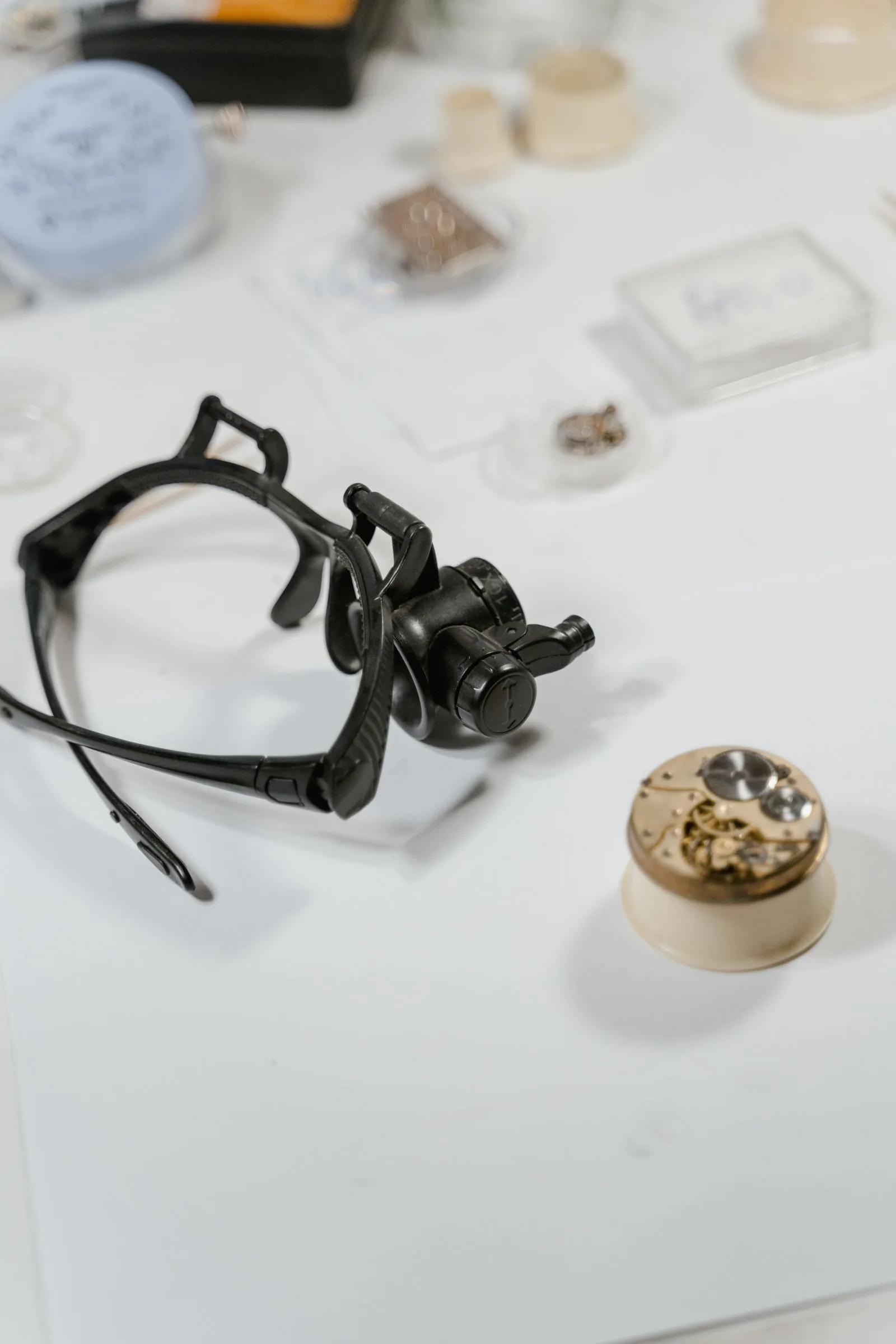
Have a watchmaker inspect any pre-owned Cartier bought outside Cartier’s certified route, and always when the seller is new to you or the papers are incomplete. The movement and the inside of the case are where copies are most likely to differ, and only a watchmaker should open the caseback.
The British Horological Institute (BHI) lists accredited members through its “Find a Repairer” page, and says repairers on its register have met its requirements for accredited qualifications. It also says it is not a trade body and cannot intervene in disputes (BHI). Ask for the watchmaker’s findings in writing, including any parts they believe are not original.
If the watch is still under Cartier’s warranty, bear in mind that the warranty does not cover repairs by anyone other than a Cartier boutique or other authorised party (Cartier). An inspection is not a repair, but ask the watchmaker to note that they opened the case and resealed it.
How do you check a Cartier is not stolen?
Search the serial number on a stolen-watch register before you pay and ask how the seller came by the watch. Cartier points owners to Enquirus, a service for registering Cartier pieces so that future losses or thefts can be reported (Cartier). Howden, the insurance broker, reported in 2023 that Cartier made up 4% of watches on The Watch Register (Howden, 2023).
The Watch Register is part of the Art Loss Register, says it holds over 125,000 lost or stolen watches, and lets private buyers search before buying (The Watch Register). The stolen watch check guide lists the UK registers and what a clear result means.
What if the Cartier watch is fake?
Stop wearing it, keep the listing, messages and payment records, and contact the seller in writing at once. If you bought from a trader, the watch must match its description (Consumer Rights Act 2015, section 11), and you have a short-term right to reject within 30 days (section 22). A watch sold as a Cartier that is not one does not match its description.
If you paid by credit card, Section 75 of the Consumer Credit Act can make the card provider jointly liable for single items over £100 and up to £30,000 (Which?). Private sales carry fewer rights; consumer rights when buying a watch online explains the difference.
Here is an illustrative scenario showing how the checks in this guide work together. Suppose a buyer is offered a Cartier Santos listed at £5,400, around 30% below similar listings, from a seller with no trading history and photos that only show the dial face-on. The price alone is a warning sign worth investigating rather than a reason to refuse outright, so the buyer asks for the serial number, close photos of the case screws and the crown cabochon, and the warranty card. The seller cannot produce new photos and pushes for a quick bank transfer instead. At this point, several independent weak signals (price, seller history, photo quality, payment method) point the same way, and no single one of them needs to be a definite fake-detector for the buyer to reasonably walk away. Had the seller instead produced matching papers, new photos showing front-mounted screws and a properly set cabochon, and agreed a written refund right subject to a watchmaker’s inspection, the transaction would warrant proceeding to that inspection rather than stopping.
Frequently asked questions
Where is the serial number on a Cartier watch?
Cartier’s warranty refers to the serial number originally engraved on the case. It should be clearly legible and match the warranty card and receipt. Cartier’s warranty does not cover a watch whose serial number has been removed or is not clearly legible (Cartier).
Can Cartier tell me if my watch is genuine?
Cartier’s published services are its warranty, Cartier Care, servicing and loss-and-theft reporting through Enquirus (Cartier). If you need a definite answer, ask a Cartier boutique what it can confirm, and use an independent watchmaker before you buy.
Does registering with Cartier Care prove a watch is real?
No. Registration uses the QR code on the warranty card or the serial number (Pragnell), and Cartier does not describe it as an authenticity check. Treat it as warranty administration, not verification.
Does a Cartier warranty transfer to a second owner?
Cartier says a Cartier Care warranty extension can be used by any subsequent buyer or owner of the watch. The extension must be requested while the initial two-year warranty is still valid (Cartier).
Is a Cartier without papers likely to be fake?
Not necessarily; many genuine watches have lost their papers. It does mean you rely more on the seller’s written guarantee, an independent inspection and a stolen-watch check.
What is the hidden signature on a Cartier dial?
On some models, Cartier writes its name into one of the Roman numerals, usually the X or the VII (Monochrome Watches, 2026). Copies reproduce it, so its presence proves little; its absence on a model that should have it is a warning.
Can you tell a fake Cartier from photos?
Only obvious ones. Photos can show a mismatched or illegible serial, missing details or poor finishing, but good copies pass a photo check. Use photos to decide whether a watch deserves an inspection.
Can a genuine Cartier have non-genuine parts?
Yes. A genuine watch can be fitted with replacement parts that are not Cartier’s. Cartier Care’s complimentary services exclude watches fitted with non-genuine parts (Pragnell), so ask the watchmaker to list any parts that do not appear original.
Is Watchfinder’s Cartier warranty from Cartier?
Watchfinder sells Cartier watches with a Cartier International Official Pre-Owned Warranty of 24 months as standard. Watches sold on its Marketplace by third-party sellers have a Watchfinder warranty instead (Watchfinder & Co.).
What if the seller is abroad?
Rights and enforcement are harder to use across borders. Pay by a method with a claims route, and allow for import duty and VAT on arrival.
I inherited or was given a Cartier. How do I check it without a receipt?
Use the same checks as for a purchase: match the serial number against the warranty card if you have one, check the model-specific details above, search the serial number on a stolen-watch register, and have a watchmaker inspect it. There is no refund route since there was no sale to you, but the inspection still matters if you plan to insure, wear or sell the watch.
Do the case screws tell you if a Cartier is real?
They are one clue, not proof. Cartier typically uses flathead screws rather than the criss-cross Phillips-head screws seen on many copies, positioned on the case front for a Santos and on the case back for a Tank (SwissWatchExpo, 2023). Screw type and position are easy for a good copy to get right, so treat a mismatch as a reason to look closer, and a match as no guarantee on its own.
Does a Cartier with a quartz movement sell for less than a mechanical one?
Often, but this is a market observation, not a Watch60 valuation claim, and it varies by model and reference. What matters for authentication rather than value is that the movement type listed should match what Cartier published for that specific reference; a model Cartier only ever made with a quartz movement should not be offered with a mechanical one, and vice versa, so check the reference against Cartier’s own specification rather than assuming either movement type by default.
Does Cartier make its own movements?
Increasingly, yes, through what it calls the Cartier Manufacture, which has produced its own calibres since the 430 MC in 1996 and continues to introduce new in-house movements (Cartier, “Movements”, checked 30 October 2026). Not every Cartier model uses an in-house calibre, so check the specific reference’s published movement.
This page is general information, not legal advice. Watch60 is independent and has no commercial relationship with Cartier or Richemont.
Sources (checked 29 October 2026)
- Cartier, International Warranty
- Cartier, Cartier Care and reporting a loss or theft
- Pragnell, Cartier Care
- FashionUnited, UK has over one million fake watches in circulation, says report (August 2023, reporting Watchfinder & Co. research)
- Monochrome Watches, The ABCs of Time: fighting counterfeiting (Erik Slaven, 28 February 2026)
- Watchfinder & Co., Cartier official pre-owned partnership
- Richemont, Annual Report and Accounts 2026
- British Horological Institute, contact us and Find a Repairer
- Howden, Calling time on watch thieves (1 November 2023)
- The Watch Register, home page
- Consumer Rights Act 2015, section 11 and section 22
- Which?, Section 75 of the Consumer Credit Act
- SwissWatchExpo, How to Tell if a Cartier Watch is Real (2023), checked 30 October 2026
- Cartier, Movements, checked 30 October 2026
We check the facts in this guide against the sources named, and it is correct to the best of our knowledge as of October 2026. Rules, rates and sellers' terms change, so confirm the details with the seller, or with a professional, before you buy.