Watch complications explained simply: a complication is anything a watch does beyond showing the hours, minutes and seconds. A date window is a complication. So is a stopwatch, a second time zone, a calendar that knows about leap years, or a chime that strikes the time. Each one adds parts to the movement, and that changes how the watch is used, set and serviced.
A complication is, in the standard definition, any feature of a timepiece beyond the display of hours, minutes and seconds (Wikipedia). Shorter definitions of the terms used here are in our A to Z of watch terms.
What is a watch complication?
It is any extra function built into the movement. Some are everyday tools, such as a date or a chronograph. Others are feats of watchmaking, such as a minute repeater. More functions mean more parts: a typical chronograph with a date may have up to 250 parts, and the most complex watches more than 1,000 (Wikipedia).
Complications are often grouped by what they do. Timing complications measure intervals. Calendar and astronomical ones track dates and the moon. Striking ones sound the time. Some, such as the tourbillon, change how the movement works rather than adding a display.
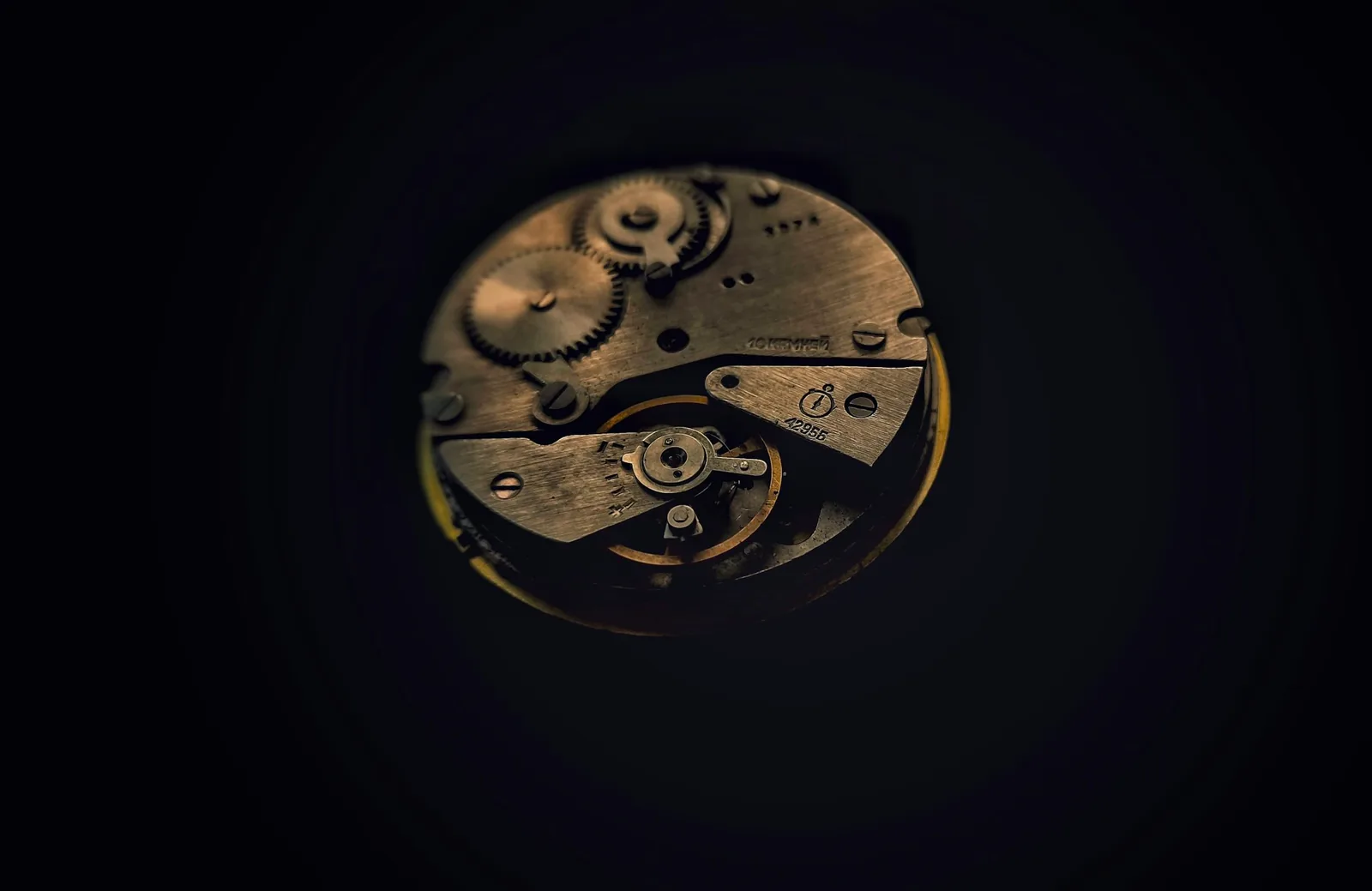
Watch complications explained at a glance
The table sets out what each common complication does, a well-known example where a brand or reputable source documents one, and what it means for servicing and everyday handling.
| Complication | What it does | Well-known example | Servicing and handling |
|---|---|---|---|
| Chronograph | A stopwatch hand you start, stop and reset with pushers | Omega Speedmaster, introduced 1957 | Costs more to service than a three-hand watch on TAG Heuer’s UK list |
| GMT / second time zone | An extra hour hand, usually on a 24-hour scale, for another zone | Rolex GMT-Master, launched 1954 with Pan Am | Set as the manual says; another hand to align after service |
| World time | Shows the time in at least 24 cities at once (Patek’s definition) | Patek Philippe World Time | A city ring and 24-hour disc to set correctly |
| Dive bezel | A rotating ring to time a dive; ISO 6425 divers’ watches need a secured, dark-visible timing system | Rolex Submariner, shown in 1954 | Water resistance test needed; Omega advises a yearly check |
| Date / day-date | Shows the date, or the date and day | Rolex Day-Date, 1956 | Do not set during the maker’s “no-set” hours |
| Annual calendar | Knows 30- and 31-day months; one correction a year, at the end of February | Patek Philippe ref. 5035, patented 1996 | Correct once a year; avoid setting in no-set hours |
| Perpetual calendar | Allows for month lengths and leap years | Patek Philippe Grand Complications | Fiddly to reset if it stops; a watchmaker can help |
| Moon phase | Shows the phase of the moon across a cycle of about 29.5 days | Common on dress and calendar watches | A common 59-tooth design drifts about a day every three years |
| Power reserve indicator | Shows how much running time is left before the watch stops | Common on hand-wound watches | Tells you when to wind |
| Tourbillon | Puts the escapement and balance in a rotating cage to offset gravity | Breguet, patented 1801 | Specialist servicing |
| Minute repeater | Chimes the hours, quarters and minutes on demand | Audemars Piguet, 1892 wristwatch movement | Specialist servicing; operate as the manual says |
| Split-seconds (rattrapante) chronograph | A second, independent stopwatch hand that can stop separately then catch up, for timing two things at once | IWC’s double chronograph models | Specialist servicing; more parts than a standard chronograph |
| Alarm | A mechanical chime set to sound at a chosen time, independent of the timekeeping | Jaeger-LeCoultre Memovox, 1951 | Needs its own winding barrel kept wound; specialist parts on vintage examples |
| Equation of time | Shows the gap between clock time and true solar time, which varies through the year | Breguet’s Marine Équation Marchante | Highly specialist; usually paired with other complications and serviced as a set |
Sources: Wikipedia, Complication (horology), Perpetual calendar, Repeater, Rolex GMT Master II, Rolex Submariner, Rolex Day-Date, Omega Speedmaster; Patek Philippe, Complications; Phillips, Geneva Watch Auction: EIGHT; Swatch Group, Breguet; AP Chronicles; Web Chronos (7 May 2025); ISO 6425:2018 scope via the Estonian Centre for Standardisation; Omega; TAG Heuer UK price list (March 2026). All checked 29 October 2026.
What does a chronograph do?
A chronograph is a watch with a stopwatch: a hand you start, stop and return to zero with pushers on the case, usually with small dials that count elapsed minutes and hours. The watch keeps telling the time while the stopwatch runs. It is not the same as a chronometer, which is a watch that has passed a precision test.
The Omega Speedmaster is the best-documented example. Omega introduced it in 1957 as a sport and racing chronograph, NASA selected it in 1965 after testing several chronographs, and Buzz Aldrin wore one on the Moon in 1969 (Wikipedia). Patek Philippe notes that scales on a chronograph dial can turn the elapsed time into other measures, such as speed, distance or pulse, without arithmetic (Patek Philippe, 2026).
A watch can be both a chronograph and a chronometer; see chronometer certification explained.
What is a GMT or world time watch?
A GMT watch shows a second time zone, usually with an extra hour hand on a 24-hour scale. A world time watch goes further and shows the time in many cities at once. Both are travel complications, and both need setting with care after a flight or a service.
The time-zone display is usually a second hour hand that typically indicates Coordinated Universal Time (Wikipedia). The Rolex GMT-Master, reference 6542, was developed with Pan Am and launched in 1954 (Wikipedia). Patek Philippe defines its World Time watches as showing the time in at least 24 cities at once, and its Travel Time watches as using two hour hands for “home” and “local” time (Patek Philippe, 2026).
What does a dive bezel do?
A dive bezel is a rotating ring around the dial. A diver lines up its zero marker with the minute hand at the start of a dive and reads the elapsed time against it. Outside diving, the same bezel times anything up to an hour, from parking to cooking.
The standard for divers’ watches, ISO 6425:2018, applies to watches designed to withstand diving to at least 100 m and fitted with a secured system to indicate diving time that is visible in darkness (ISO 6425:2018 scope, via the Estonian Centre for Standardisation). The Rolex Submariner, with its rotating bezel, was first shown to the public at the Basel fair in 1954 (Wikipedia). A dive bezel only helps if the case keeps water out; Omega recommends a water resistance check once a year (Omega, 2026).
What is the difference between a date, annual and perpetual calendar?
A simple date shows the day of the month and needs correcting after every month shorter than 31 days. An annual calendar knows 30- and 31-day months and needs correcting once a year, at the end of February. A perpetual calendar allows for month lengths and leap years, so it needs no correction while it runs.
Date and day-date. The Rolex Day-Date, presented in 1956, shows the day of the week spelled out in full (Wikipedia). Most date watches have hours when you should not change the date. Seiko’s manual for its 6R15 movement says not to set the date between 10pm and 1am, because the date may not change properly or the watch may malfunction (Seiko). Wikipedia notes that working a mechanism during these no-set periods, or without the manual, can cause defects.
Annual calendar. Patek Philippe patented the annual calendar in 1996 and launched it in reference 5035, the first wristwatch with one; it needs only one correction a year, at the end of February (Phillips; Patek Philippe). Rolex combined an annual calendar with a second time zone in the Sky-Dweller in 2012 (SJX Watches, 8 March 2012).
Perpetual calendar. A watch with a perpetual calendar shows the date correctly “perpetually”, allowing for the different lengths of the months and for leap years (Wikipedia). If one stops, it has to be reset to the right date, month and year in the leap-year cycle, following the manual, which is why some owners keep one running on a winder; see how to store a watch collection.
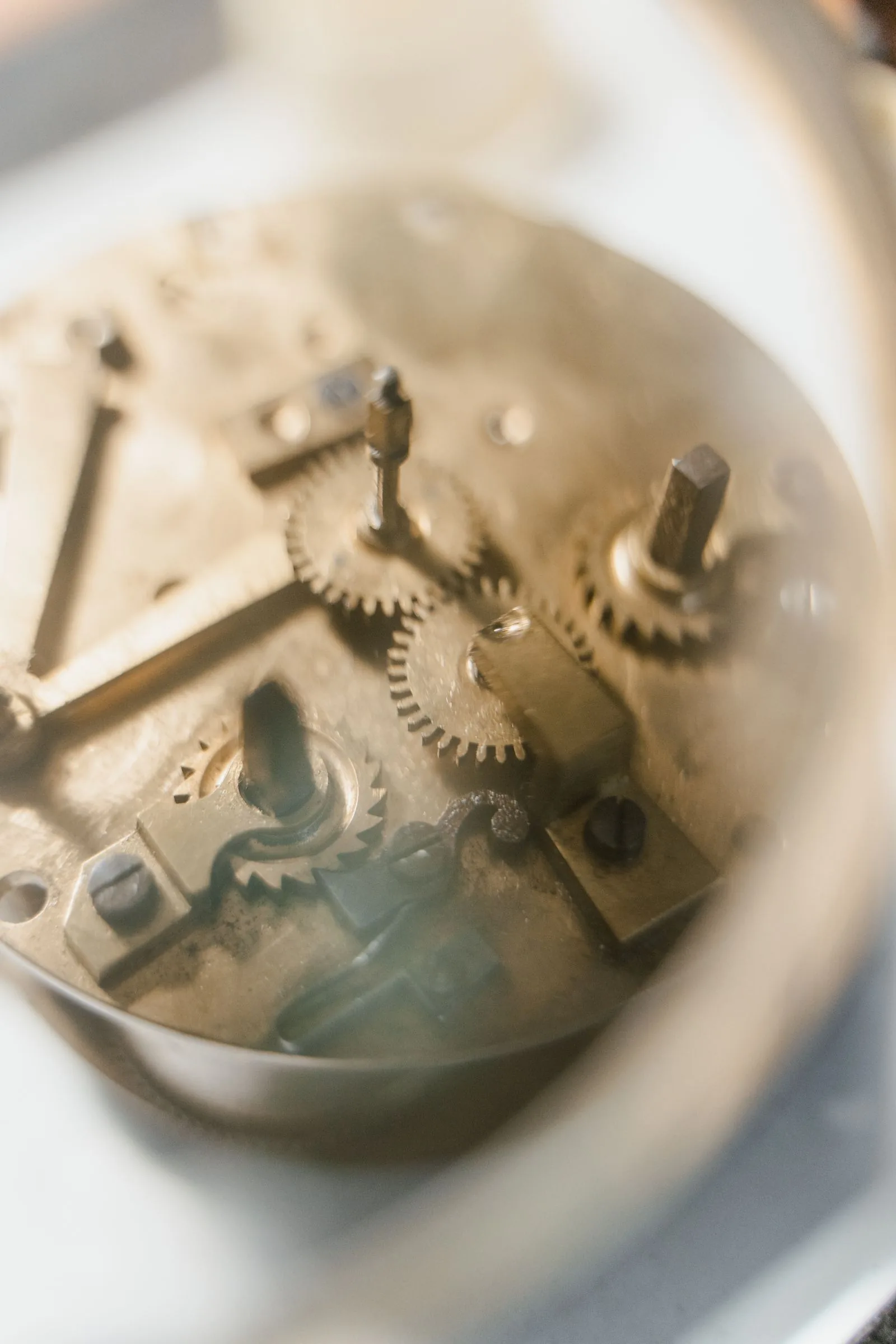
What do moon phase and power reserve indicators show?
A moon phase shows the shape of the moon in the sky, using a disc that turns once each lunar cycle. A power reserve indicator shows how much running time is left in a wound mainspring, often as a small hand on a scale. One is astronomical, the other practical.
Moon phase. The moon’s average cycle is about 29.5 days. A common design uses a 59-tooth wheel and drifts by about one day every three years; a more precise 135-tooth design cuts that to about one day every 122 years (Web Chronos, 7 May 2025). Patek Philippe describes its moon phases as needing minimal adjustments over decades (Patek Philippe, 2026). Check the manual for how to set one.
Power reserve. Power reserve is how long a wound mechanical watch runs before it stops. The indicator, also called a réserve de marche, is listed among mechanical complications (Wikipedia). It is most useful on a hand-wound watch, where it tells you when to wind.
What are a tourbillon and a minute repeater?
A tourbillon is a refinement of the escapement: the balance and escapement sit in a rotating cage, to even out the effect of gravity in different positions. A minute repeater is a chiming mechanism that sounds the time on demand. Both need specialist servicing.
Tourbillon. Wikipedia describes the tourbillon as a mechanical refinement to an escapement that mitigates the effects of gravity. Abraham-Louis Breguet was granted a patent for it on 26 June 1801 (Swatch Group).
Minute repeater. A minute repeater chimes the hours with a low tone, the quarter hours with a two-tone “ding-dong”, and the minutes with a high tone. You push a slide on the side of the case, which winds a separate spring that powers the chime (Wikipedia). In 1892 Audemars Piguet made one of the first minute-repeater wristwatch movements (AP Chronicles). Patek Philippe’s chiming watches sit in its Grand Complications collection, alongside perpetual calendars (Patek Philippe, 2026).
What is a split-seconds chronograph?
A split-seconds, or rattrapante, chronograph adds a second stopwatch hand that runs beneath the main one, letting you record two separate elapsed times from the same start. IWC describes it as an additional seconds hand on a mechanical chronograph: a push-button, typically at 10 o’clock, stops the split-seconds hand independently while the main stopwatch hand keeps running, and pressing the same button again makes the split-seconds hand jump forward to resynchronise with it (IWC, checked 30 October 2026). That lets you time, for example, two runners who start together but finish at different moments, reading the first finisher’s time, then the second’s, from the same stopwatch run.
It’s a genuine step up in mechanical complexity from a standard chronograph, since the watch needs an extra set of parts to stop, hold and resynchronise the split-seconds hand without disturbing the primary chronograph function running underneath it. That added complexity is reflected in servicing: a rattrapante has materially more parts to strip and adjust than the chronograph in the servicing table above, and fewer workshops are set up to service one.
What does an alarm complication do?
An alarm complication sounds a chime at a time you set in advance, independent of the hands showing the current time. Jaeger-LeCoultre’s Memovox, launched in 1951, was an early mechanical wristwatch alarm (Vulcain’s Cricket, from 1949, came slightly earlier as the first). Early Memovox models wound the timekeeping and the alarm from two separate barrels, which is why they had two crowns: sounding the alarm didn’t drain the power reserve you needed to keep telling the time. The first automatic version, the 1956 Memovox Automatic, let a rotor wind the timekeeping barrel while the alarm barrel was still wound by hand (Wikipedia, Memovox, checked 30 October 2026).
The complication later went to sea and underwater. Jaeger-LeCoultre’s Deep Sea Alarm Automatic, from 1959, is described as the world’s first diver’s watch with a mechanical alarm, and the Polaris, from 1965, added an internal rotating bezel operated by a third crown, with a perforated case back on its 1968 version specifically to help the alarm’s sound carry through water and against the wrist (Wikipedia, Memovox, checked 30 October 2026). Buying a vintage alarm watch pre-owned, check that both barrels still wind properly and that the alarm actually sounds, since this is a mechanism many watchmakers see far less often than a standard movement.
What is the equation of time?
The equation of time is the gap between civil, or mean, time (what a normal clock shows) and true solar time (where the sun actually is in the sky), and a watch with this complication shows both at once, usually with two minute hands. Breguet, whose own house made some of the most elaborate equation-of-time watches of its era, explains that mean time can run up to 16 minutes behind true solar time around 3 November, and up to around 14 minutes ahead around 12 February, with the two matching on only four days a year (Breguet, checked 30 October 2026).
A running equation of time, such as the one in Breguet’s Marine Équation Marchante, moves its second minute hand continuously to track true solar time throughout the day, rather than jumping between fixed positions; Breguet pairs this one with a perpetual calendar and a tourbillon in the same watch (Breguet, checked 30 October 2026). It’s a complication built for its elegance and rarity rather than daily usefulness in an age of accurate clocks everywhere, and it’s almost always found alongside other high complications rather than on its own, which is reflected in how it’s serviced: as part of a specialist overhaul of the whole movement, not a standalone job.
How do complications affect servicing?
More complications mean more parts to strip, clean, lubricate and adjust, so servicing usually costs more and can take longer. They also add handling rules: no-set hours for calendars, water tests for dive watches, and pushers you should not press underwater unless the manual says you can.
TAG Heuer’s UK price list shows the effect on cost. Its complete service is £410 for a mechanical watch and £495 for a mechanical chronograph; for quartz, £270 against £355 for a quartz chronograph (TAG Heuer, March 2026, VAT included, non-binding). For other brands’ prices and intervals, see how much a watch service costs.
Before buying a complicated watch pre-owned, ask when it was last serviced and by whom, and whether the brand or a specialist can service that calibre. Ask for the manual, too: setting instructions for calendars and moon phases differ from model to model.
Frequently asked questions
What counts as a watch complication?
Any function beyond showing the hours, minutes and seconds. A date window counts.
Is a chronograph the same as a chronometer?
No. A chronograph has a stopwatch. A chronometer has passed a precision test, such as COSC’s. A watch can be both.
What does GMT mean on a watch?
A second time zone, usually shown by an extra hour hand on a 24-hour scale.
Is every watch with a rotating bezel a divers’ watch?
No. ISO 6425 sets requirements for divers’ watches, including a secured timing system visible in the dark and resistance for diving to at least 100 m. Ask whether a watch was sold as one.
How often does an annual calendar need correcting?
Once a year, at the end of February, according to the auction description of Patek Philippe’s reference 5035.
Does a perpetual calendar ever need correcting?
Not for month lengths or leap years while it keeps running. If it stops, it must be reset carefully.
How accurate is a moon phase?
A common 59-tooth design drifts about a day every three years; a 135-tooth design about a day in 122 years (Web Chronos, 2025).
What is a tourbillon for?
To offset the effect of gravity on the balance and escapement by rotating them in a cage.
What does a minute repeater chime?
Hours with a low tone, quarter hours with two tones, and minutes with a high tone.
Do complications make servicing more expensive?
Usually. On TAG Heuer’s UK list a mechanical chronograph costs more to service than a three-hand mechanical watch.
Can I change the date at any time?
No. Many movements have no-set hours around midnight. Seiko’s 6R15, for example, should not be set between 10pm and 1am.
What’s the difference between a chronograph and a split-seconds chronograph?
A standard chronograph has one stopwatch hand. A split-seconds, or rattrapante, chronograph adds a second hand that can stop independently and then catch up, letting you record two separate elapsed times from a single start.
How does a mechanical alarm watch work?
A separate winding barrel powers a hammer that strikes a chime at a time you’ve set, independently of the hands showing the current time, which is why early alarm watches such as the Jaeger-LeCoultre Memovox had two winding crowns.
What does the equation of time show?
The difference between civil (clock) time and true solar time, which varies through the year and matches on only four days, shown on a dial with two minute hands rather than one.
Sources (checked 29 October 2026)
- Wikipedia, Complication (horology), Perpetual calendar and Repeater (horology)
- Wikipedia, Omega Speedmaster, Rolex GMT Master II, Rolex Submariner and Rolex Day-Date
- Patek Philippe, Complications and Grand Complications collections
- Phillips, Patek Philippe reference 5035, The Geneva Watch Auction: EIGHT
- SJX Watches, Baselworld 2012: Rolex Sky-Dweller (8 March 2012)
- ISO, ISO 6425:2018 Horology: Divers’ watches (page refused automated access). Scope as reproduced by the Estonian Centre for Standardisation
- Omega, preserve your Omega: watches
- Seiko, 6R15 instruction manual
- Web Chronos, IWC’s moon phase watches: how they work (7 May 2025)
- Swatch Group, Breguet
- AP Chronicles (Audemars Piguet), The epic AP saga (2025)
- TAG Heuer, UK service price list (March 2026)
- IWC, Double chronograph (rattrapante)
- Wikipedia, Memovox
- Breguet, Invention: the equation of time
We check the facts in this guide against the sources named, and it is correct to the best of our knowledge as of October 2026. Rules, rates and sellers' terms change, so confirm the details with the seller, or with a professional, before you buy.